Palestinian Resistance History, Present and Future
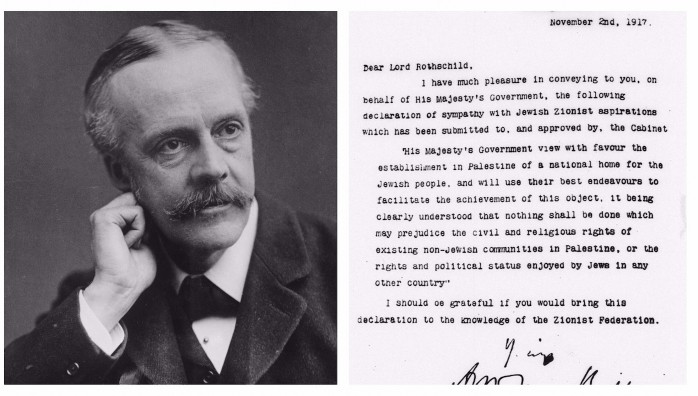
This exhibition seeks to visually shed light on the evolution of Palestinian resistance movement over the last 100 years, tracing its roots from the infamous Balfour Declaration of November 2, 1917, to what many Palestinians calls the beginning of decolonization on October 7, 2023, known also as the "Al-Aqsa Flood". Using the historical trajectory of the Palestinian resistance as a backdrop, we aim to shed the light on key influential persons from resistance movement, artists, painters, poets, authors, singers and show the broader geopolitical contexts that have shaped the Palestinian struggle for decolonization and freedom.
, �
"I�L•'. ·t,,
�1s1sזA•e•
IS NOT TEROMISM
•
ןז·
The Balfour Declaration's issuance ignited a century- long battle against settler-colonialism and relentless efforts to uproot the indigenous Palestinian people from their homeland.
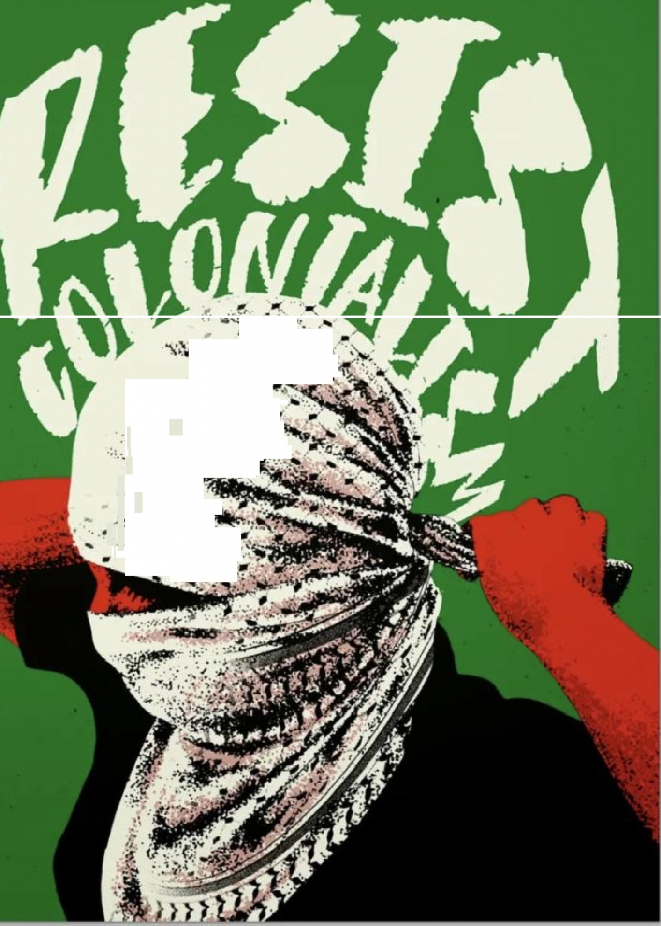
On October 7th, Palestinian resistance shattered a century of imposed constraints, breaking the chains of oppression, and tearing through the prison walls.
Between these two defining moments, generations of Palestinian resistance have risen, evolving into a powerful force that now fuels decolonization movements across the globe.

1
1
·,
. ,,,,,
. '•5· �
-/
•
j/
./
, 41'
I
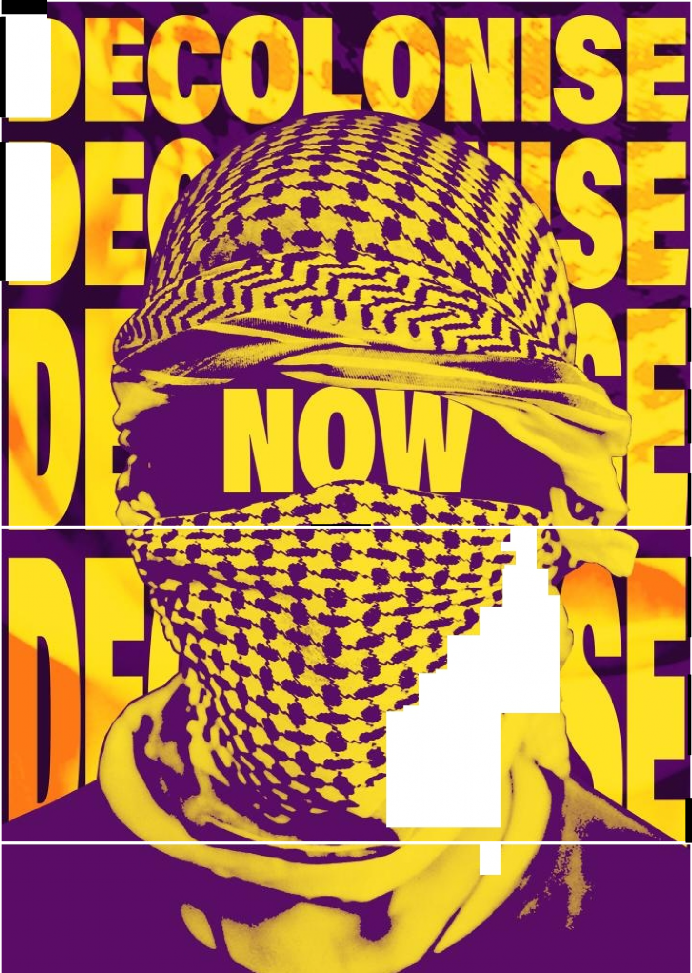

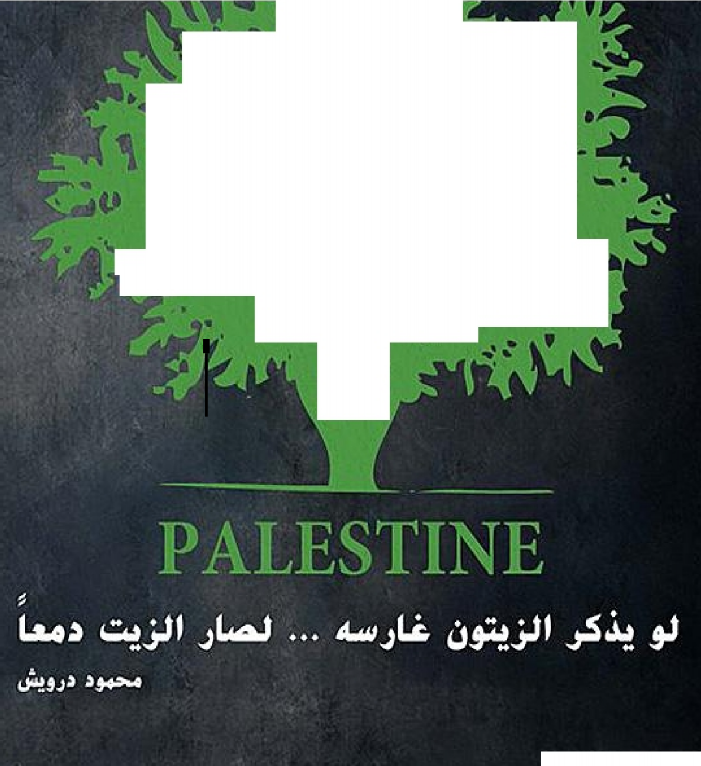
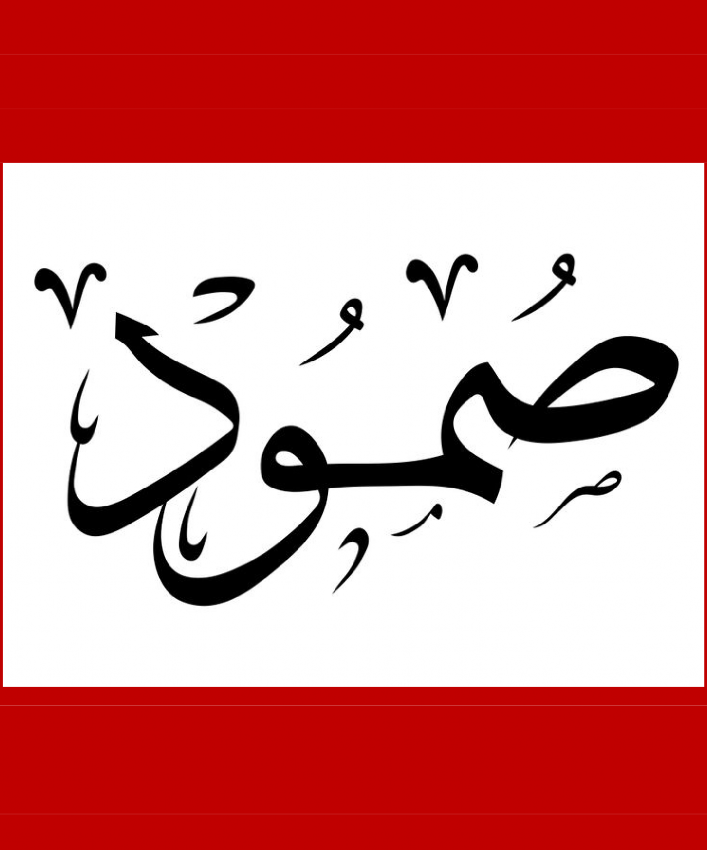
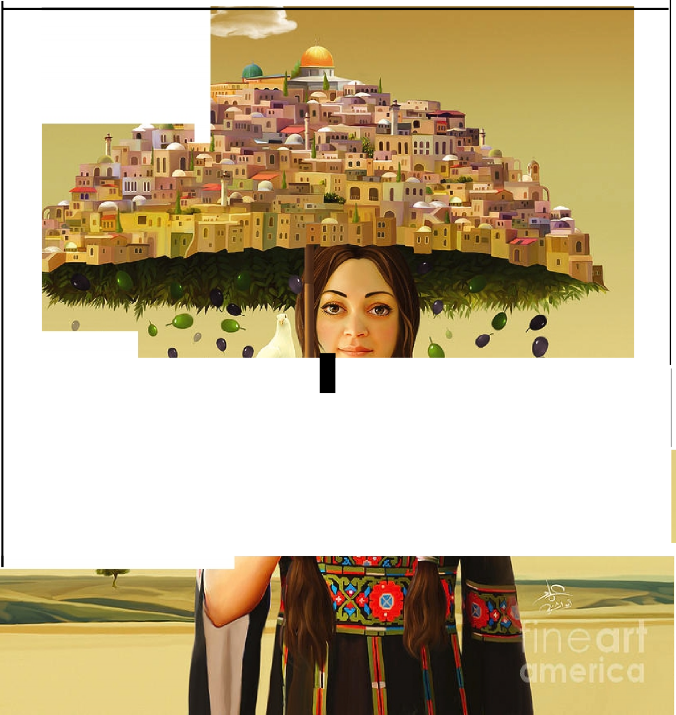
In Palestine, the land of olives, za’atar, and Sumud, the land itself stands as a unifying force, binding its people together through history, struggle, and resilience. Songs, art, and both spoken and unspoken stories all revolve around the deep-rooted connection to the land—Palestine— echoing its significance as the heart of identity, resistance, and belonging.
•
......
.' <-
'

...
,
••
ב
,
'f ••
.. ••
•
'� י#
• ' r ' • f•
,
•
• •�."ו. •
•'
•
.�,',,.
,.,-.
' ' • •
� '
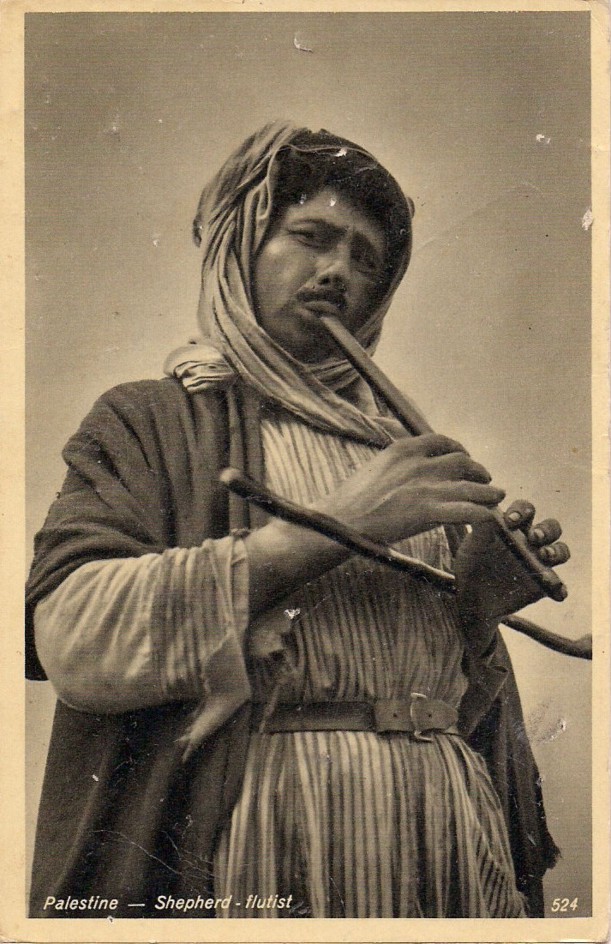
Palestinian shepherd flutist in traditional dress, c.1910–1920



.l..
�j,\
•
··�י
� • ••!
•
•.. •
� ... •
' • ,
••Q
1917- Infamous Balfour Declaration
The Balfour Declaration was the promise of those who did not own to those who have no title, giving away the property of the absent lawful owners
Palestinian Artists from the Pre-Nakba Era
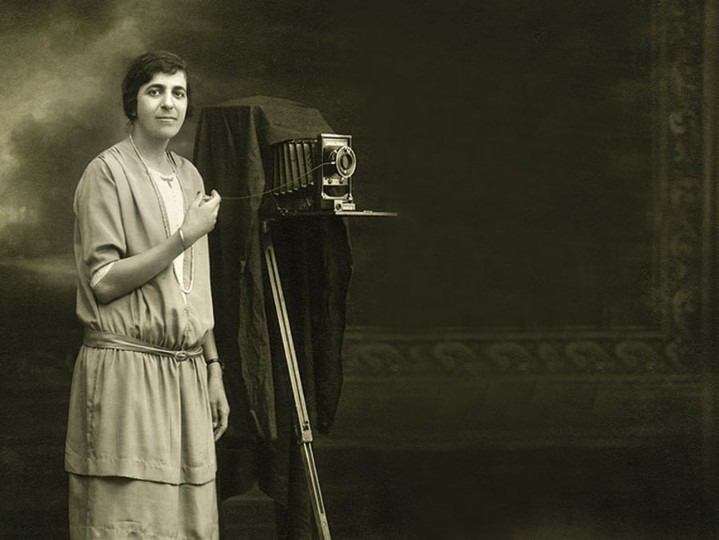
Karimeh Abbud (1896–1940) was a pioneering Palestinian photographer and artist, recognized as one of the first female photographers in Palestine and the Middle East. Her work not only documented Palestinian society but also broke gender barriers in the field of photography. Abbud's contributions remain significant in the history of Palestinian art and photography, highlighting her role as a trailblazer for women in the region’s visual arts.
Examples of Abbuds works:
Source https://www.wikiart.org/en/karimeh-abbud
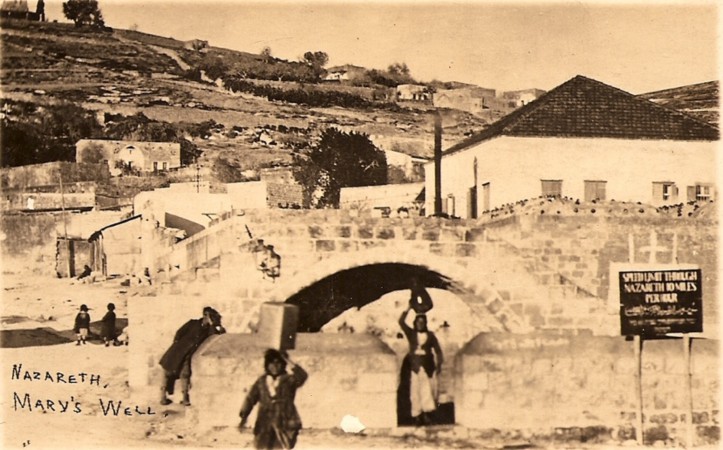
Maryes Well 1920 by Karimeh Abbud
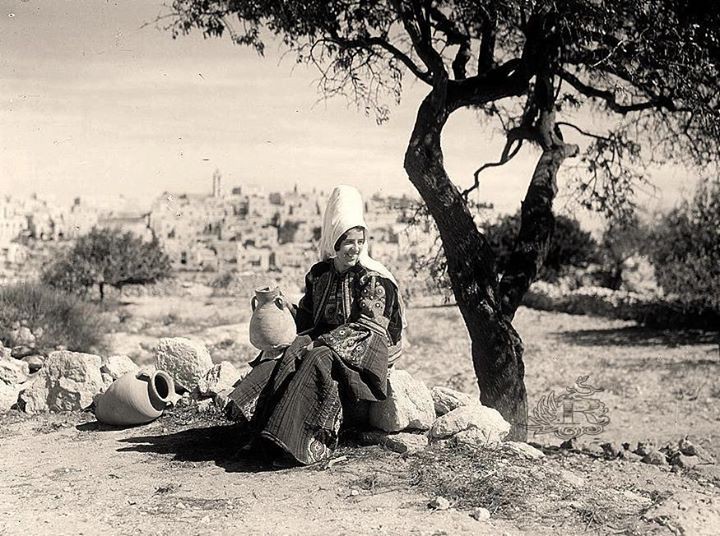
A Palestinian lady from Bethlehem 1928
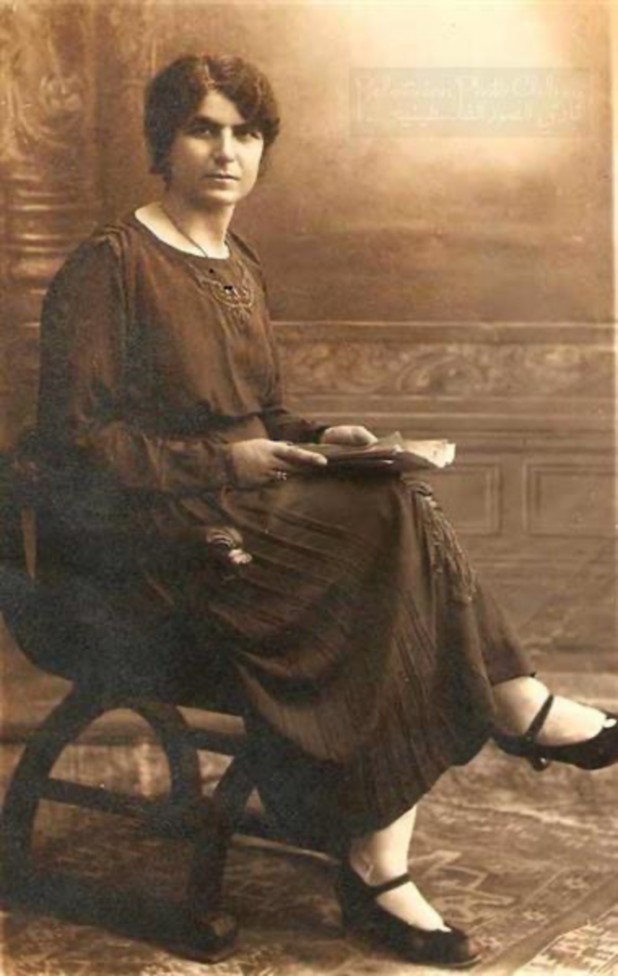
Dr.Chafika Abboud, Gynecologist 1928
Period: 1920-1935: The first wave of resistance against the British rule in Palestine
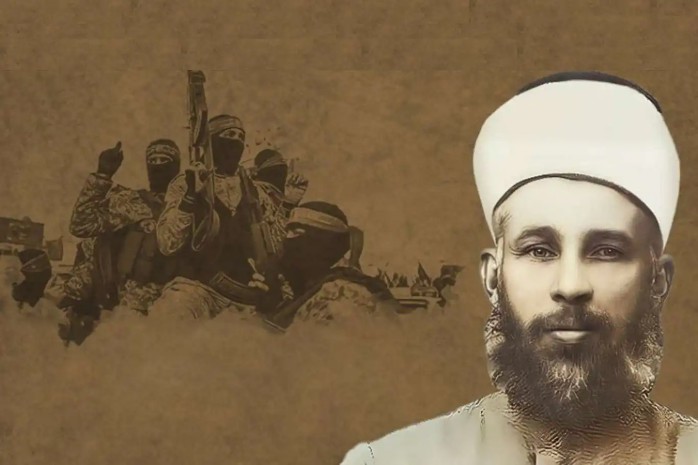
Izz al-Din al-Qassam
A Muslim preacher from Syria and resistance leader against British and French colonial rule in the Levant. Born in 1882 in Jableh, he studied at Al-Azhar University and later joined the Libyan resistance against Italian invasion. He fought the French in Syria before fleeing to Palestine, where he advocated for armed struggle against British rule and Zionist colonization. In the 1930s, he organized militant groups like the Black Hand and led attacks on British and Zionists targets. He was assassinated by the British in 1935.
His assassination was to a large extent instrumental in igniting the Great Palestinian Rebellion (1936–39).
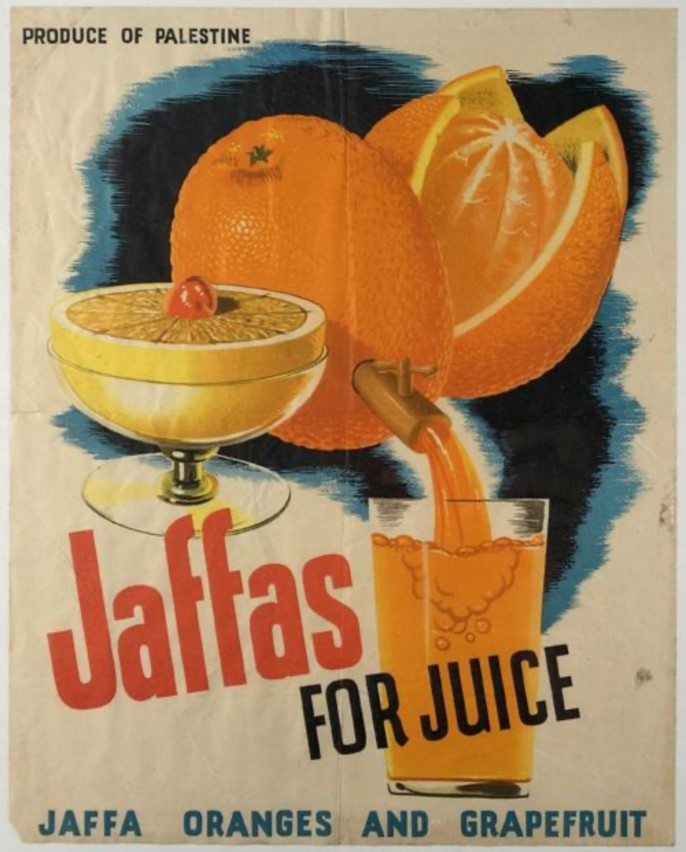
Zionist Propaganda focus: (a land without a people for people without a land)
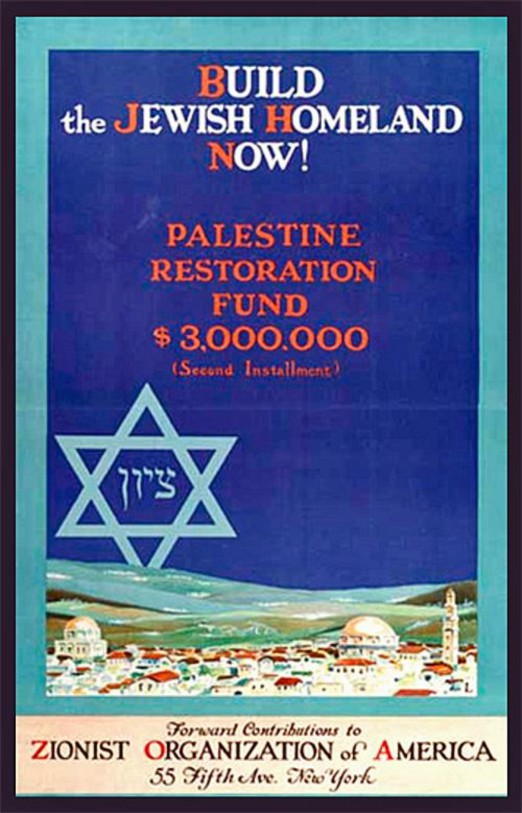
A poster for the jewish fund to raise money to colonize palestine from 1919

A zionist poster from 1935: A land of wheat and barley, vines, fig trees and pomegranates a land of olive oil and honey

In its early stages, the Zionist movement openly recognized itself as a colonial enterprise, acknowledging its aim to establish a settler-colonial presence in Palestine.

נewis
ס Pa est·ne,
Veaוr
ALנ[hc-1 i


ו migra
5.514,
9,49
,84
7,421
2:.8-$
33..BO
13.081
2,7U
.s. 4'S
9י'�י'�
4.075
'9,ss3
30321
42.359
Gו,BS4
29;rn
r,
178

Jeיי.vish

i זר


Aיn est1 1ma1ted 376,4 5 כewis
 1h 11mmigran
 its, mostly from Europ 1
air·ri·ved in 1Palest1�ne betweeח 9י20 and 11946 ,acco1rding to
Br itish records.
יי-----י----"-----י---י---י----נ.--י-----י---יי-----י--י----י-_.,_---------י---יי---י--.-=:;;;;;;...יי------..1.----י--י----יי----י----י---
l92.0
9 י25
193י0
935
5
400 ,,000

300,000
200..000
100000
·ן,940 194


.-.;;:.ו-.ו..---1,'1.Aנ.1 •
0
1920
'1921
1922
2נ
1924
ןg;ןs
192.6
2.
1927
28
1929
19']0
1
"J9.32
ןg.3-3
!וl'tי
19]5
1936
19!'1
1938
נ
19.ii.Q

41
19 2
�
ןg,43
'J9יי+!i
1946
4,E,47

3�47
2.194
B-501
,464
,751
A
{


�rםום�•-@•- Source: A survey of Pailes.ti. •.  1(1946}
•IJ Z בl!, K
  ·
·
The first wave of immegriation to Palestine was in the period 1882-1903. Most of them were European Jews, who come mainly from Eastern Europe. Before their arrival, there were well-established local Palestinian Jewish communities in Jerusalem, Hebron, Tiberias and Safad, numbering in total about 24,000. Between 1882 and 1903, 25,000 Jewish immigrants settle in Palestine. Part of the immigrants settle in rural areas and establish agricultural enterprises, aided the massive financial contributions of wealthy European Jews, most notably Baron Edmond de Rothschild and Baron Maurice de Hirsch . Others establish themselves in Jerusalem where the number of Jews, from the early 1880s to 1891, grows from 13,900 to 25,300. In Jaffa, there are no recorded Jewish inhabitants in 1880, their number reaches 2,500 in | |
1893 | |
Palestinian National Congresses
1918 - 1934
Between 1918 and 1934, Palestinians organized themselves in response to Britain’s policies in Palestine, particularly the Balfour Declaration. They formed a network of Muslim-Christian associations and held seven Palestinian National Congresses between 1919 and 1928, which laid the groundwork for future Palestinian political movements.
The 1st Congress (1919) in Jerusalem sent memoranda to the Paris Peace Conference rejecting the Balfour Declaration and advocating for independence within Syria. The 2nd Congress was blocked by British authorities, leading Palestinian leaders to appeal to the Syrian Congress for international representation.
The 3rd Congress (1920) in Haifa marked a shift toward a distinct Palestinian identity, denouncing British legislative control and forming the Arab Executive Committee under Musa Kazim al- Husseini. The 4th Congress (1921) sent a delegation to London to oppose the Balfour Declaration. The 5th Congress (1922) in Nablus rejected British-imposed governance structures, refusing participation in elections for a Legislative Council.
The 6th Congress (1923) in Jaffa reaffirmed rejection of British political maneuvers, while the 7th Congress (1928) in Jerusalem called for a parliamentary government in Palestine. The death of al-Husseini in 1934 led to the decline of the Arab Executive Committee and the Congresses, ending this phase of Palestinian political mobilization.
Al-Buraq uprising 1929
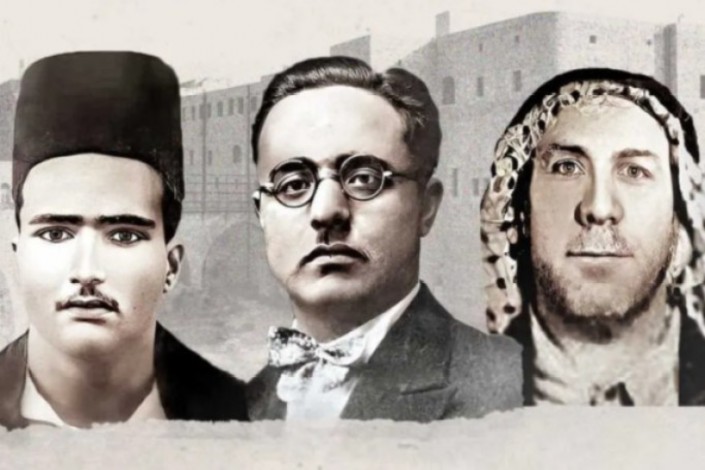
Fouad Hijazi, Atta al-Zeer and Mohammed Jamjoum. The Heros of Albruaq-Uprising
In this uprising, the british killed 120 Palestinian who revolouted against the growing grab of palestinian land by the sinonist invaders that was faciliated by the British Authorties at the time.
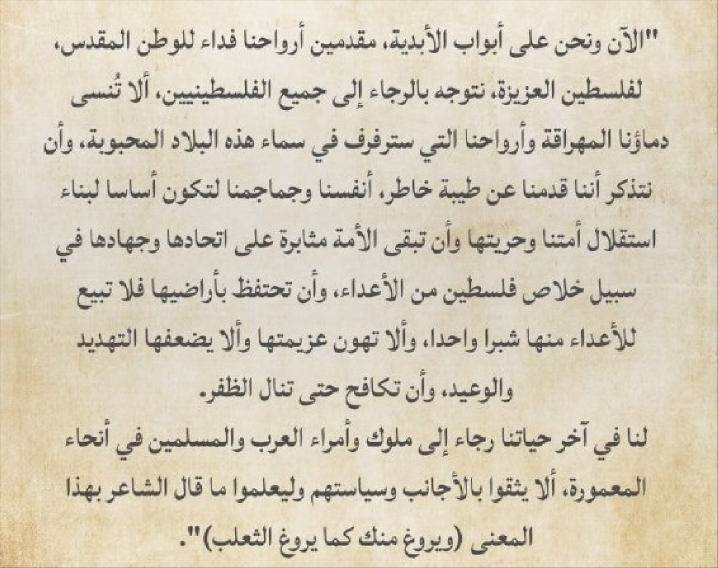

Testament of the Heroes of the Al-Buraq Uprising
Now, as we stand at the gates of eternity, offering our souls as a sacrifice for the sacred homeland, our beloved Palestine, we make this final plea to all Palestinians: Never forget our spilled blood and our soaring souls that will forever echo in the skies of this beloved land.
Remember that we have sacrificed ourselves willingly, so that our sacrifice may serve as a foundation for the independence of our nation and its freedom. Let our nation remain united in its struggle for the liberation of Palestine from the grip of the enemy. Do not yield an inch of its land to foreigners, do not degrade its dignity, and never bow to threats or intimidation. Strive with all your might against oppression.
With our last breaths, we call upon the kings and leaders of the Arabs, as well as Muslims across the world, to never place their trust in foreign powers and their policies. Let them heed the words of the poet who said:
"Beware of the fox, for he may deceive like a cunning wolf."
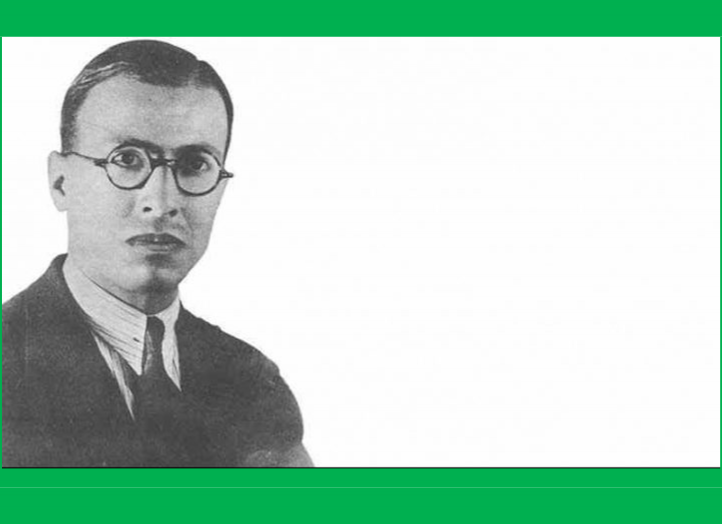
Palestine poet Ibrahim Tuqan 1905-1941
Ibrāhīm Tuqān was born in Nablus in 1905.Tuqān’s poetry focused on the Arab struggle against British rule, gaining widespread fame during the 1936–39 Arab Revolt. According to some schloars, Tuqan's poetry is marked by sincerity and emotional veracity. His verse clear and direct, the diction simple and well-chosen, and the phrases powerful and often terse.
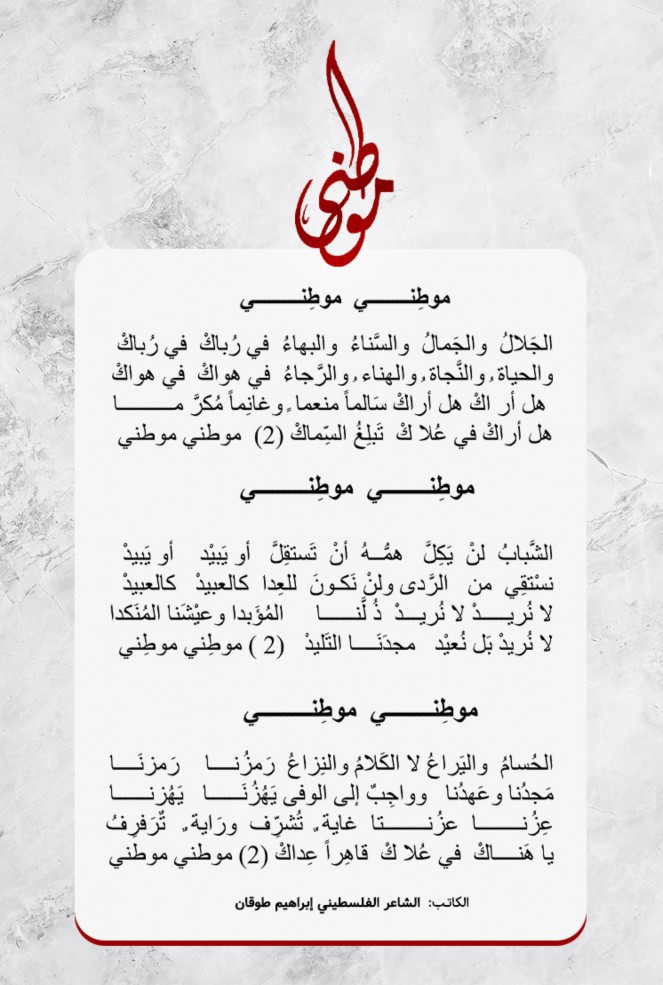
Mautini A poem by Ibrahim Tuqan 1934
My Homeland, My Homeland
The grandeur, beauty, splendor, and brightness Are in your hills, in your hills
Life, salvation, joy, and hope Are in your air, in your air Will I see you? Will I see you?
Safe, prosperous, and honored Will I see you? In your eminence
Reaching the stars, reaching the stars?
My homeland, my homeland
My Homeland, My Homeland
The youth will never tire
Of striving for independence or perishing We will drink from death, but we will not Be to our enemies like slaves
We refuse, we refuse
Our eternal humiliation and our degrading life We refuse, we refuse
Our glorious past to be desecrated
My homeland, my homeland
My Homeland, My Homeland
The sword and the spear, not mere words and disputes Are our symbols, our symbols
Our glory and our covenant, and a duty To remain loyal, to remain loyal
Our honor is a noble cause And a flag that waves with pride
O there, in the heights,
Defeating your enemies, defeating your enemies
My homeland, my homeland

Great Palestinian Rebellion (1936–39).
A widespread uprising against British colonial rule and growing Zionist colonization. the Revolt was one of the earliest large-scale Palestinian resistance movements. It was brutally suppressed by the British with mass arrests, executions, and the destruction of villages. The British response to the Arab Revolt (1936–1939) was brutal. Historian Walid Khalidi estimates total Arab casualties at nearly 19,800, with over 5,000 deaths. Around 10% of Palestinian Arab men aged 20–60 were killed, wounded, imprisoned, or exiled. Inspired by Izz al-Din al-Qassam, the revolt evolved into a broad national uprising against British rule.
Read more about the Great Palestinian Rebellion
https://www.palquest.org/en/highlight/158/great- palestinian-rebellion-1936-1939
. ,ן,.
�(,..
...... ........
. ..,_,•
-
.
,•"i'f'r"f'.ב.- ..
,.
. <..r•;.·
...�.�._,..
•:t !' •
ייי
.'..
&•...A•
·י=•••
ו .ן " 1· � "!י":.. �
.·... ,,ן ., �י ; •
•יו,� •"יי=- ן
. ·•.· �יי•
�
-- .. י-י�,.': �
,.).ו,�
,'•,····•.J,י::..�..-.,�ז��
• �ב'-�•\
J. ..�


The Great Palestinian Rebellion, also known as the Great Arab Revolt, lasted three years and unfolded in three distinct phases.
Phase 1 (Spring 1936 – July 1937)
April 1936: The rebellion was sparked by an attack between Nablus and Tulkarm, killing two Jewish drivers, followed by retaliatory killings by a jewish group Irgun
April 19, 1936: A general strike was called in Nablus and spread across Palestinian cities.
April 25, 1936: The Arab Higher Committee (AHC) was formed, led by Haj Amin al-Husseini, to coordinate resistance.
May 8, 1936: A nationwide general strike was launched, bringing Palestinian economic activity to a halt.
British Response: The British used harsh tactics, including home demolitions, night raids, arrests, and deportations.
October 1936: Under British and Arab diplomatic pressure, the AHC called off the strike and agreed to meet the Peel Commission.
July 1937: The Peel Commission Report recommended partitioning Palestine, fueling Palestinian anger and relaunching the armed rebellion.
Phase 2 (July 1937 – Fall 1938)
Rebels gained control over large areas, including Jerusalem’s Old City.
They established their own institutions, including courts and a postal service.
The British escalated repression:
AHC and Palestinian political parties were banned.
Prominent Palestinian leaders were arrested and exiled.
Villages were collectively punished.
The Jewish paramilitary Haganah gained British support, and Special Night Squads launched violent raids on Palestinian villages.
Phase 3 (Fall 1938 – Summer 1939)
January 1938: The British appointed the Woodhead Commission to reassess partition.
November 1938: The Woodhead Report rejected partition as unfeasible.
1939: The British launched a brutal crackdown:
Increased killings, executions, and mass detentions.
Internal rifts emerged between exiled leadership and local rebels.
British-backed Palestinian “Peace Bands” fought against the rebels.
By mid-1939, the rebellion was largely suppressed.
This rebellion was a major chapter in Palestinian resistance, demonstrating widespread opposition to British rule and Zionist expansion, despite the brutal repression that ultimately quelled the revolt.
Notable Palestinian Historians that you are advised to read:
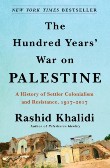
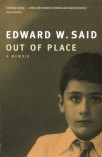
Rashid Al- Khaldi | Salaman Abusitta | Nur Maslaha | Edward Said |
|
|
|
|

Palestinian women selling flowers on Yafas Railroads 1930

Pre-Nakba picture of a Palestinian Christian girl from Bethlehem

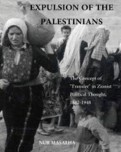
Architekt of the transfer Yosef Weitz, a Polish born jew who was director of the Settlement Department of the Jewish National Fund (JNF ), and later head of the Israeli government’s official Transfer Committee, wrote in his diary on 20 December 1940:
Between ourselves it must be clear that there is no room for both people together in this country…. We shall not achieve our goal of being an independent people with the Arabs in this small country. The only solution is Palestine ….. without Arabs…. And there is no other way but to transfer the Arabs from here to the neighbouring countries; to transfer all of them; not one village, not one tribe should be left.
" (Expulsion Of The Palestinians, p. 94-95)

Mohammed Amin al-Husseini (1897–1974) was a Palestinian Arab nationalist and Muslim leader in Palestine. A descendant of the Jerusalemite al-Husayni family. Appointed Grand Mufti of Jerusalem in 1921, he opposed Zionism and was an ally of the British until 1936. Haj Amin died in Beirut in 1974 and was buried in the Martyrs' Cemetery.
A Palestinian Artist Jussuf Abbo (1890–1953)
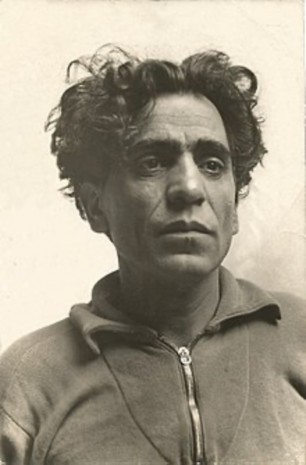
Jussuf Abbo (1890–1953) was a sculptor and artist born in Safed, Palestine. He displayed early artistic talent, earning a scholarship to study in Jerusalem before working as a stonemason under German architect Otto Hoffmann. In 1911, he moved to Berlin, studying at the Berlin University of the Arts and later becoming part of the avant-garde art scene. Abbo fled Nazi Germany in 1935, settling in England, but struggled to re-establish his career. His works were labeled "Degenerate Art" and destroyed. Financial hardship and war impacted his health, and he died in London in 1953 after a long illness.
Palestinian ART
In the first period, Beginners (1795–1955), icon painting was developed as one of the country's earliest traditions of picture making. Palestinian icon painters of the early twentieth century concurrently delved into Western art techniques, but the possibility of their developing an indigenous art was aborted when Palestinian society was uprooted in 1948.

The Nativity, XIX century, Mucem/Yves Inchierman
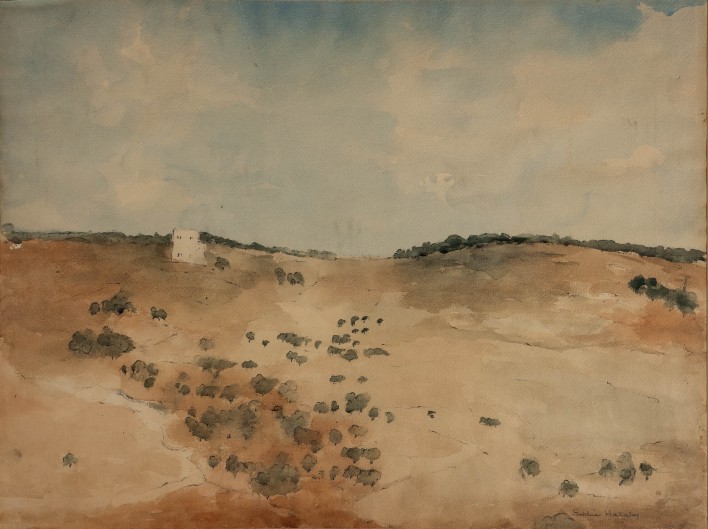
The Mount of Olives, Sophie Halaby, 1954, The Palestinian Museum
With the establishment of Israel, Palestinian artists found themselves facing the predicament of their own people, who were now either reduced to a minority in their country of birth or herded into refugee camps in neighboring countries. Under these conditions, promising talents aspiring to careers in art were thwarted.
1948: The Nakba (Catastrophe)
Following the end of the British Mandate and the creation of Israel, over 900,000 Palestinians were forcibly displaced from their homes. Massacres, expulsions, and systematic ethnic cleansing marked this period.
Film to watch
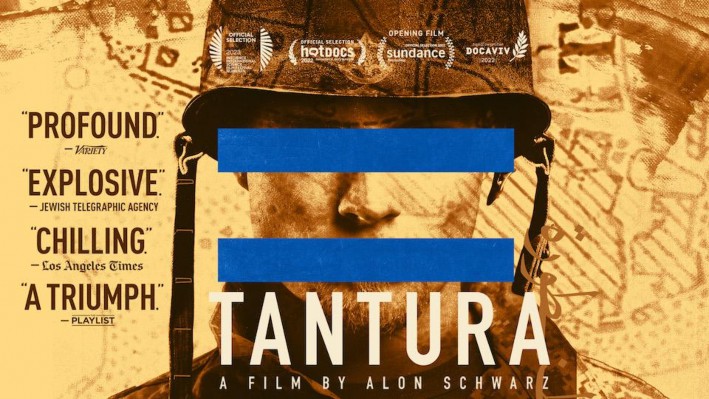
Alon Schwarz grew up believing Israel’s founding myths but began questioning them after discovering Teddy Katz’s research on Tantura (1948). Initially intending to document human rights activists, Schwarz shifted focus upon hearing Katz’s 100+ hours of testimonies, particularly from Jewish soldiers. Using modern audio enhancement, he uncovered chilling confessions and systemic silencing of history.
Book to read:
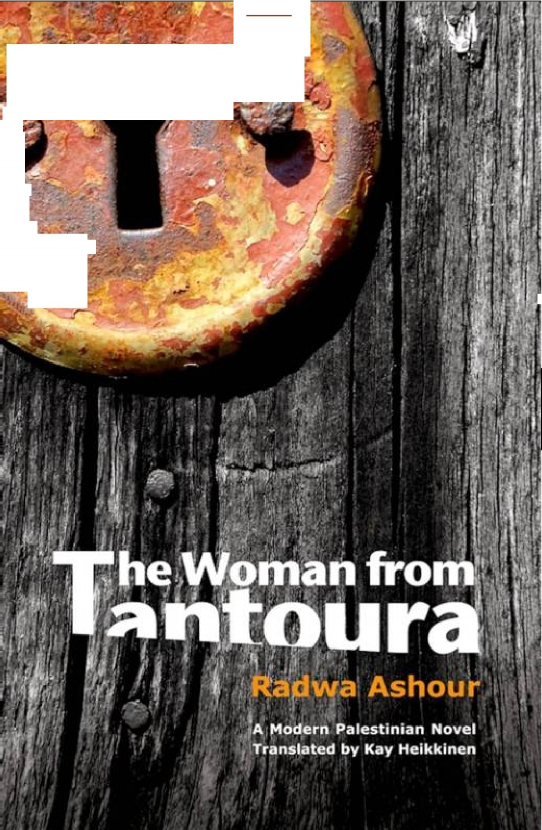
Woman from Tantura (Radwa Ashoor)
The Woman from Tantoura by Radwa Ashour is a novel that portrays the enduring suffering of Palestinians through the story of Ruqayyah, a young girl from the village of Tantoura. The novel starts with the 1948 Nakba, detailing the massacre of her village by Zionist forces, the displacement of her family, and their journey through Palestine, Syria, and Lebanon as refugees. Through Ruqayyah’s perspective, the book vividly captures the loss of homeland, forced exile, and the struggles of Palestinians, including the betrayal by Arab states and the PLO during Israel’s 1982 invasion of Lebanon and the Sabra and Shatila massacres. The storytelling allows readers to connect deeply with Ruqayyah’s personal pain and the broader Palestinian experience, emphasizing the importance of preserving history despite the trauma it carries.
https://www.middleeastmonitor.com/20231206-the- woman-from-tantoura-2/
.4.,,,��,-י�
'
·�
·li
?
� 't
�
.,,.,
..;ו-,:
•
J:.
r
In search of Fatima
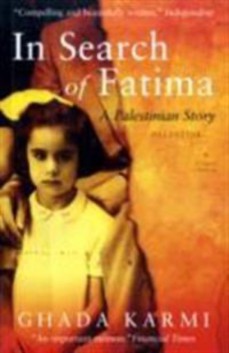
Ghada Karmi (born 1939) is a Palestinian-born academic, physician, and author known for her writings on Palestinian issues in publications such as The Guardian, The Nation, and the Journal of Palestine Studies. Born in Jerusalem to a Palestinian father and Syrian mother, she grew up in the Katamon neighborhood before her family fled to Damascus in 1948, later settling in London. Her 2002 autobiography, In Search of Fatima, details this displacement. Karmi studied medicine at the University of Bristol, specializing in the health and social conditions of ethnic minorities, migrants, and asylum seekers before shifting to academia and advocacy.
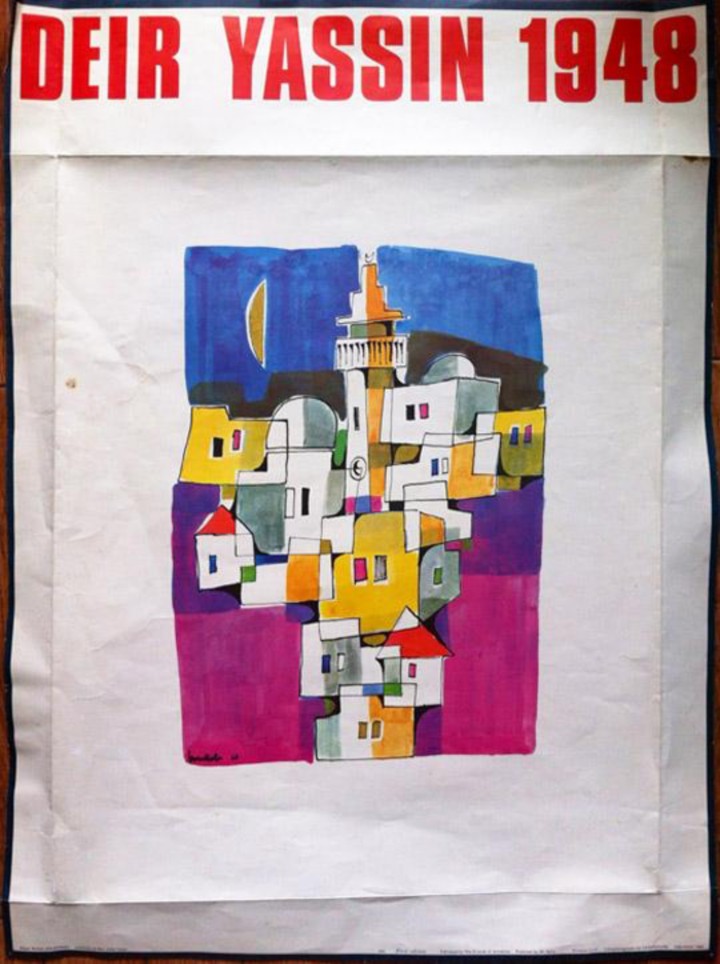
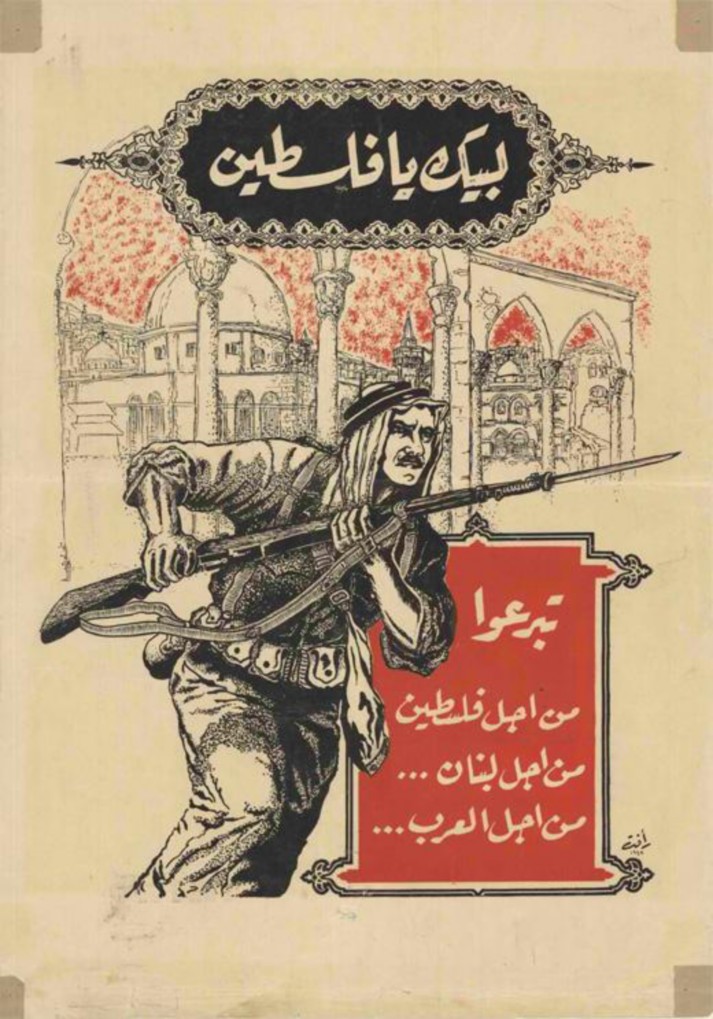
Posters from 1948 period

Nakba Poet: Harun Hashim Rasheed
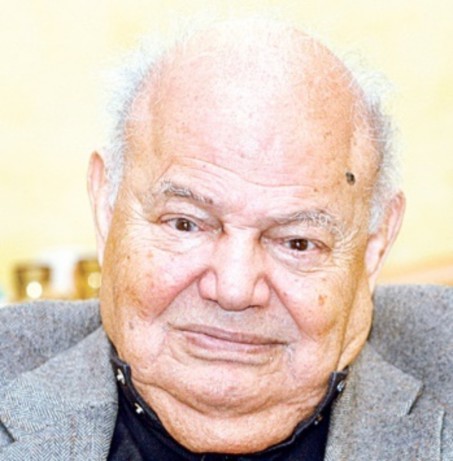
Haroon Hashem Rashid Palestinian
Al Ghoraaba’ was written as a poem by Harun Hashim Rasheed, a poet of the Nakba, then adopted by the Lebanese duo, The Rahbani Brothers, who transcribed it into song. It was then sung by the Lebanese icon Fairouz. Born in Gaza in 1927, Rashid survived the Nakba and was among the first to set up tents to shelter Palestinian refugees exiled by Zionist forces. In the 1950s, he worked first as a teacher and then as the director of the popular Palestinian radio station, Sawt al-Arab. Rashid hosted Malcolm X during his 1964 visit to Gaza.
We shall return to our village one day and drown in the warmth of hope
we shall return though time passes by and distances grow between us.
O heart don't drop wearied on the path of our return how it wounds our pride that birds tomorrow will return while we are still here.
There are hills sleeping and waking on our pledge and people who love their days comprised of waiting and nostalgic songs places where willows fill the eye
Bending over the water while afternoons in their shade drink in the perfume of peace.
We shall return the nightingale told me when we met on a hill that nightingales still live there on our dreams and that among the yearning hills and people there is a place for us
.
0 heart then how long has the wind scattered us.
Come, we shall return let us return

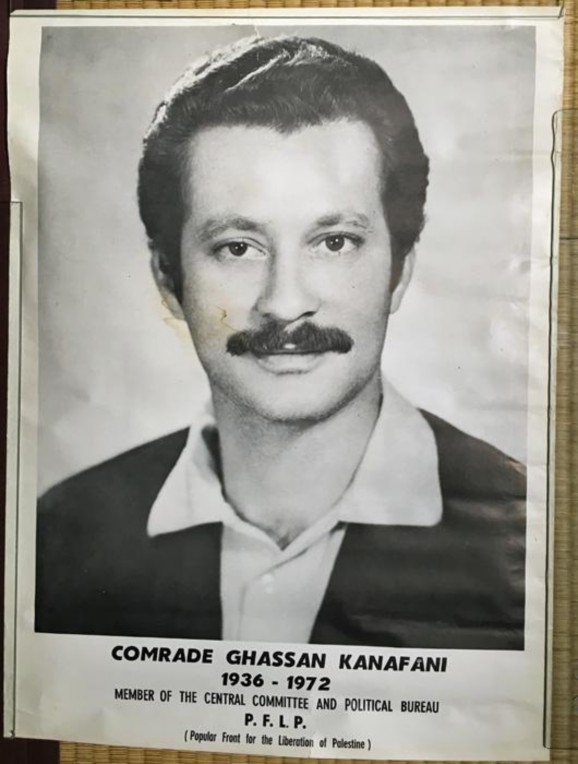
Ghassan Kanafani
Ghassan Kanafani (1936–1972) was a Palestinian writer, journalist, artist, and political activist. Born in Acre, his family fled Jaffa in 1948 after the Nakba, seeking refuge in Lebanon before settling in Damascus.
His political involvement began in 1953 when he joined the Arab Nationalist Movement. He later moved to Kuwait (1956), where he taught and wrote for publications like al-Fajr. In 1960, he relocated to Beirut, where he worked as an editor for several newspapers, including al-Hurriyya, al-Muharrir, and al-Anwar.
Kanafani played a crucial role in the Popular Front for the Liberation of Palestine (PFLP), co-founding the movement in 1967 and becoming its spokesman and editor of its magazine, al-Hadaf.
A prolific writer, Kanafani authored novels, short stories, and plays, many of which have been translated into 16 languages. His most famous novel, Men in the Sun, was adapted into the 1973 film The Deceived, a landmark in Arab cinema.
Kanafani was assassinated by the Israeli Mossad in Beirut on 8 July 1972, with a bomb placed in his car, killing him and his niece. He was posthumously awarded several literary prizes, including the Lotus Prize and the
Jerusalem Medal for Culture. His works remain essential in Palestinian literature, depicting Palestine both as a cause and as a universal human struggle.
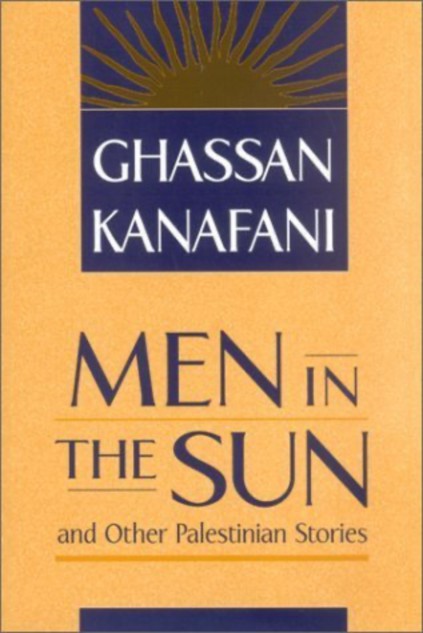

journalist, teacher, and Palestinian activist Ghassan Kanafani includes the stunning novella Men in the Sun (1962), the basis of the movie The Dupes (1972, directed by Tewfik Saleh). Also in the volume are "The Land of Sad Oranges" (1958), "'If You Were a Horse...'" (1961), "A Hand in the Grave" (1962), "The Falcon" (1961), "Letter from Gaza" (1956), and an excerpt from Umm Saad (1969). In the unsparing clarity of his writing, Kanafani offers the reader a gritty look at the agonized world of Palestine and the adjoining Middle East.
This collection of important stories by novelist,
Palestinan Art Post Nakba (Pathfinder 1955- 1965)
In the second period, Pathfinders (1955–65), a new art was forged by pioneers, most of whom grew up as refugees. Three politically engaged artists— Ismail Shammout, Mustafa al-Hallaj, and Naji al-Ali—used their art to amplify Palestinian resistance, with al-Ali becoming a renowned satirical cartoonist before his assassination in London. Together, these artists preserved Palestinian identity and struggle through their work. Unlike earlier painters, these artists received formal education and developed unique styles, often reflecting themes of exile and Palestinian cultural heritage.
Painter: Ismail Shammout
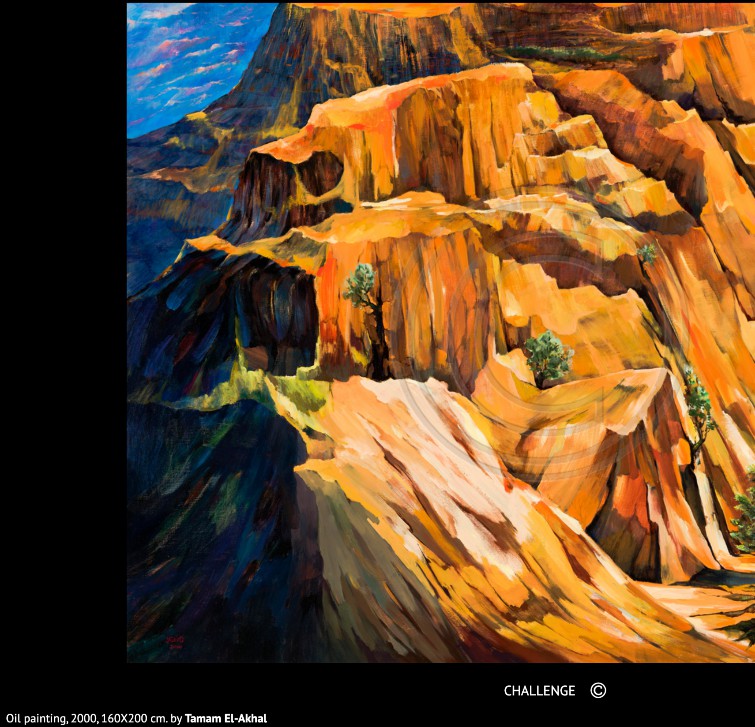
Ismail Shammout (1930–2006) was a Palestinian artist born in Lydda. During the 1948 Nakba, he and his family were forcibly displaced, enduring a long march before settling in Khan Younis refugee camp in Gaza. Despite harsh conditions, he pursued art studies in Cairo and later at the Accademia di Belle Arti in Rome. In 1959, he moved to Beirut, where he married fellow Palestinian artist Tamim El-Akhal. The couple lived and worked in Beirut until 1983, later relocating to Kuwait, Germany, and finally Amman in 1994. Shammout, a key figure in Palestinian art, passed away on July 3, 2006.
His 1953 painting Where to ..?, depicting the Lydda Death March of 1948, is an iconic representation of the Palestinian refugee experience. The artwork features an elderly man leading distressed children, with a backdrop symbolizing displacement.

Where 2? Ismail Shamoot 1953

Jaffa the orange bride 1965
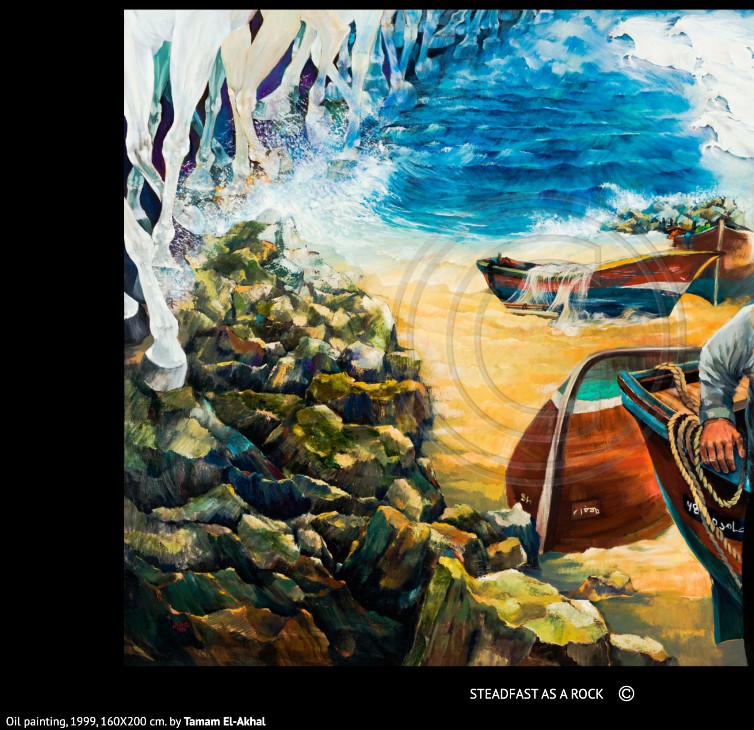
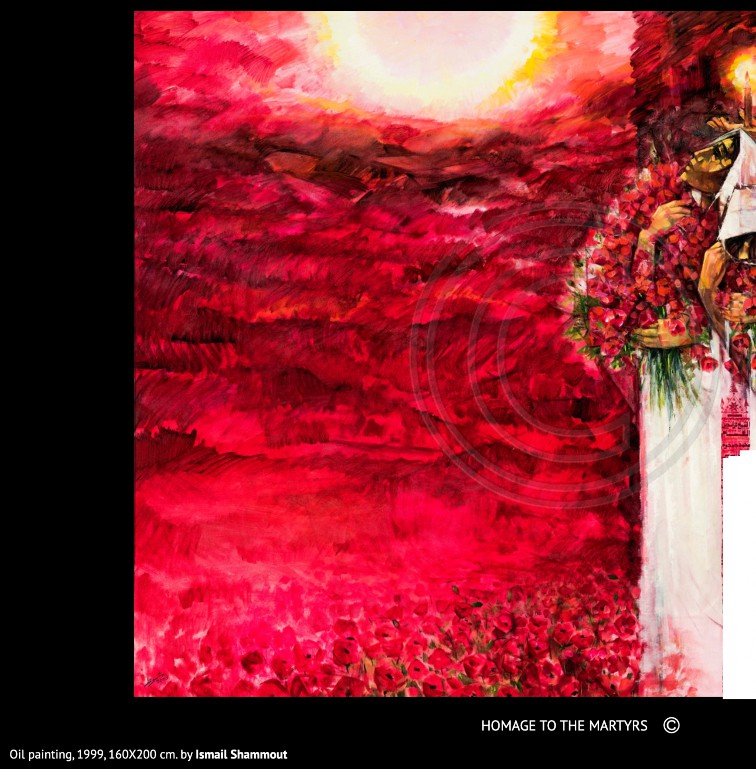
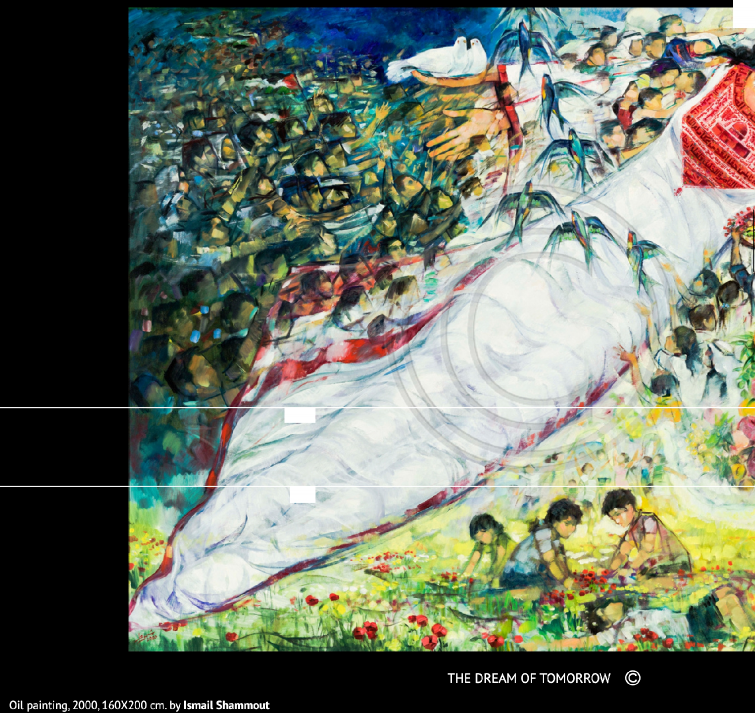
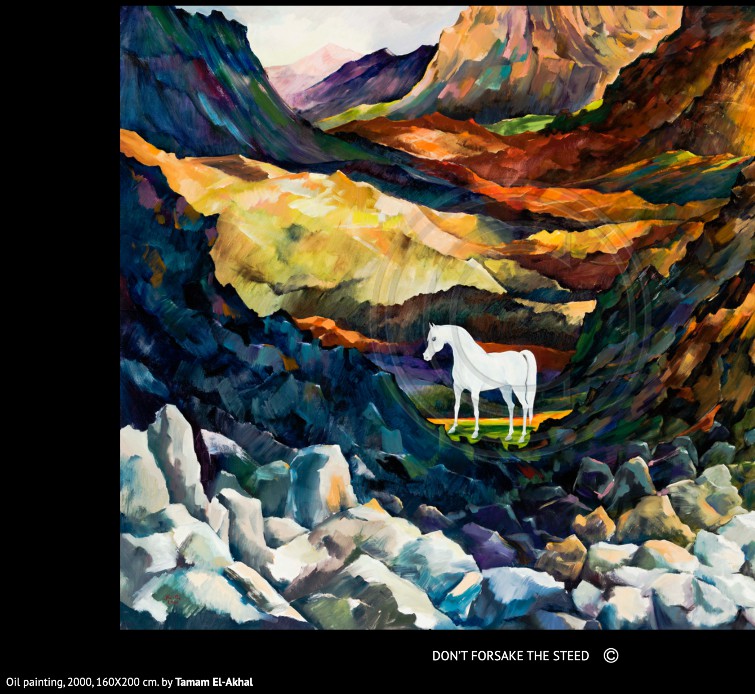
Between 1997 and 2000, Shammout and al Akhal created Palestine: The Exodus and the Odyssey, a series of 19 murals narrating Palestinian history since 1948.
https://www.fununarts.com/e-o-collection

f:,נ3.�
fב
ש
;.-�
t;-!&.עi
�,.,,
'i".."o", ,N
�li{.-a-r.-·:-jj
•
����..,.
��
,,t
...,..wi
-ייי"'-"-י+
.,,,1!"
,-::;�
/:
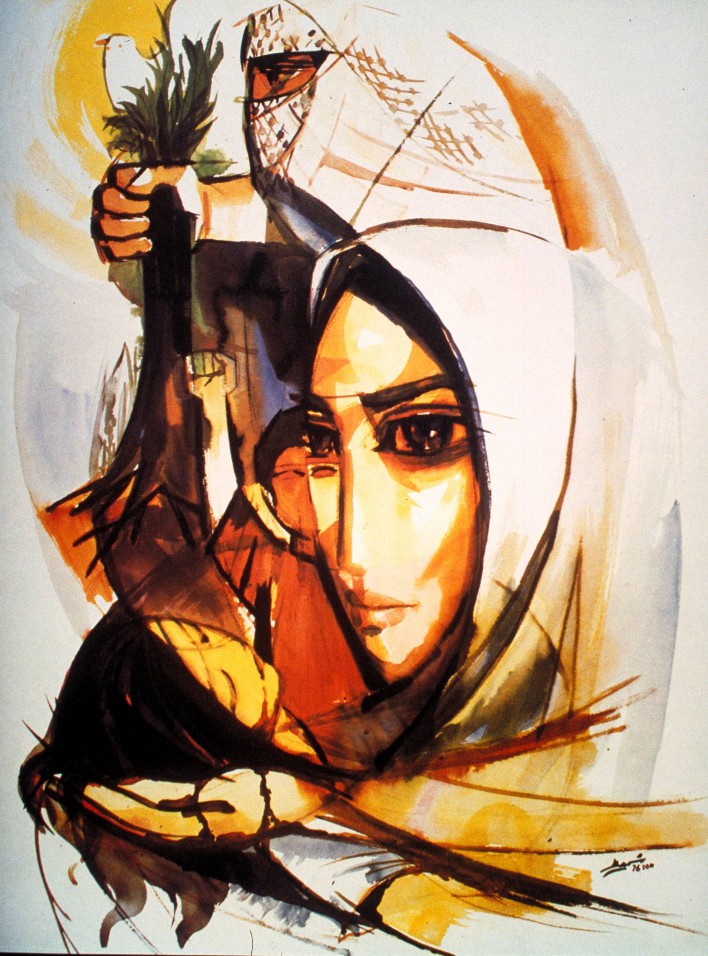
Tal al-Za'atar - Dignity In Grief 1976 Ismail Shamoot
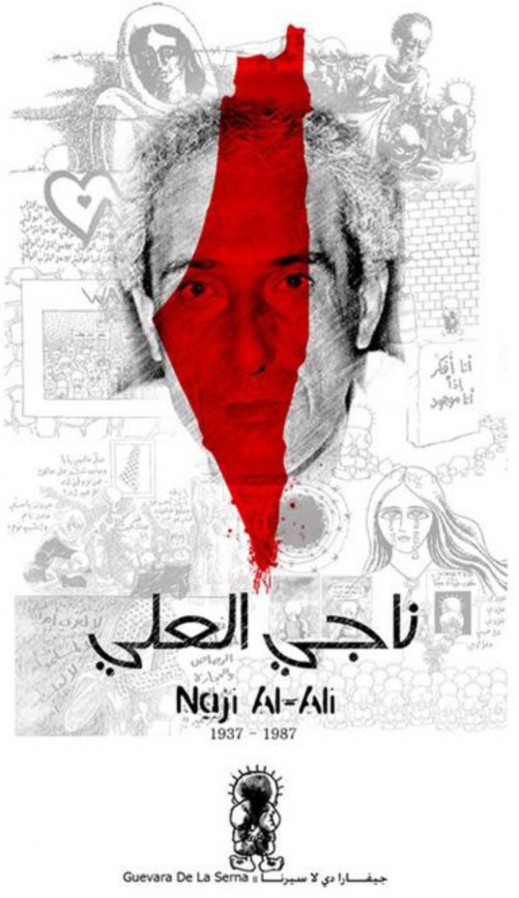
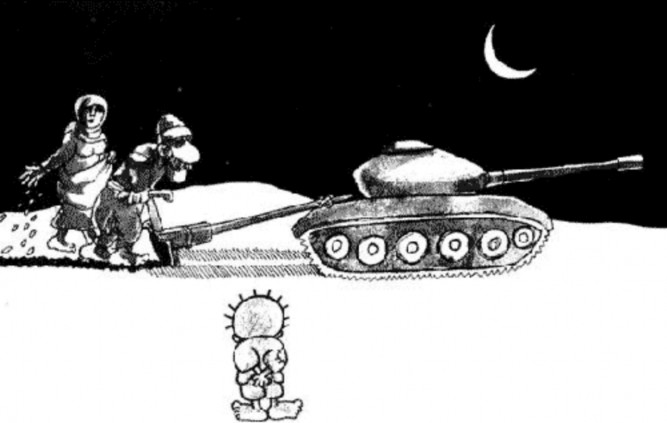
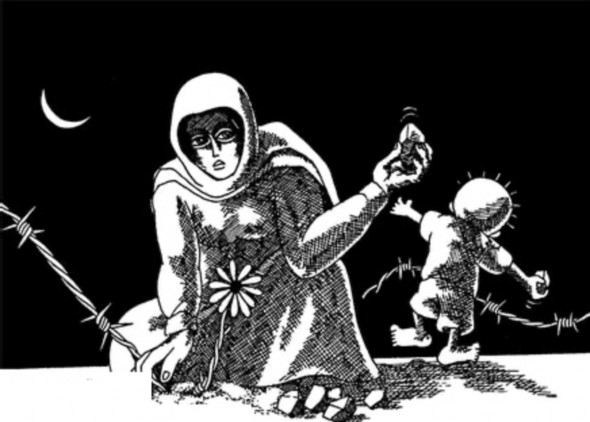
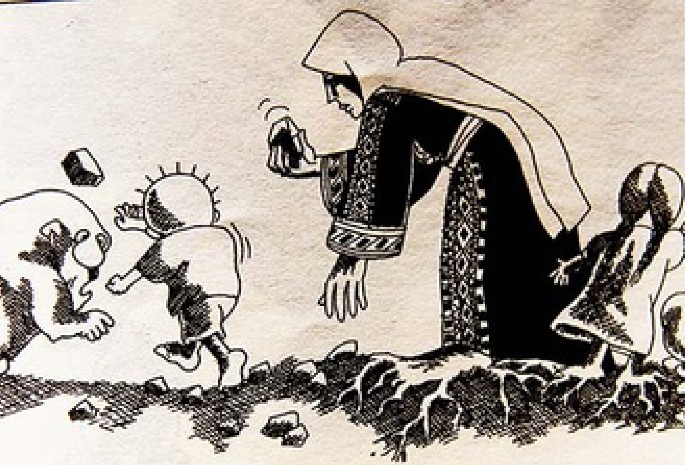
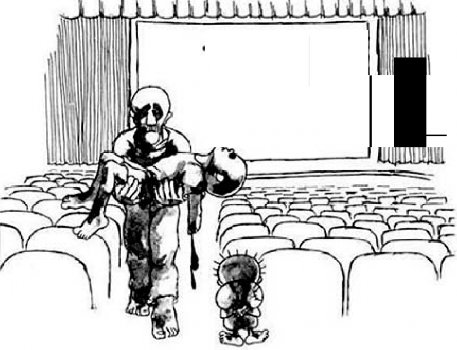
Palestinian Artist, Father of Handala: Naji Alali
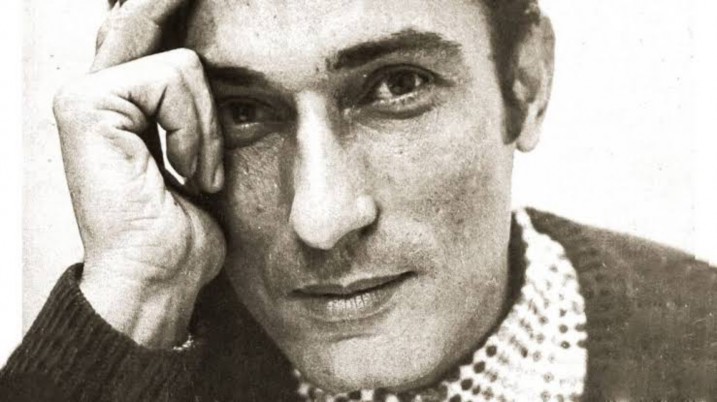
Naji al-Ali (Arabic:
1987–1938
,ﻲﻠﻌﻟا
ﺎﻲﻧﺟ
) was a prominent
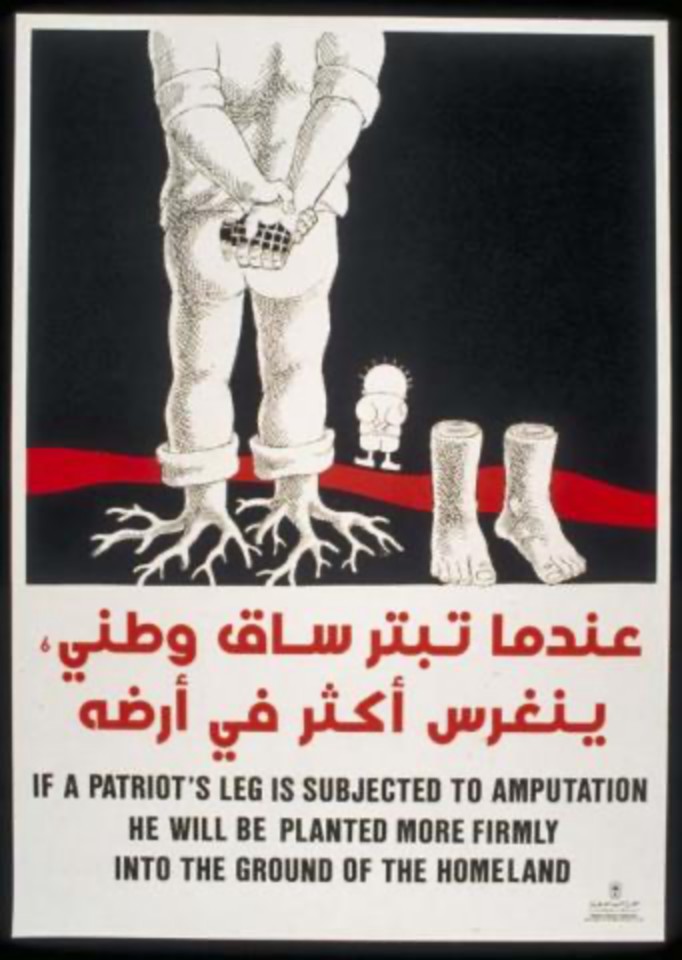
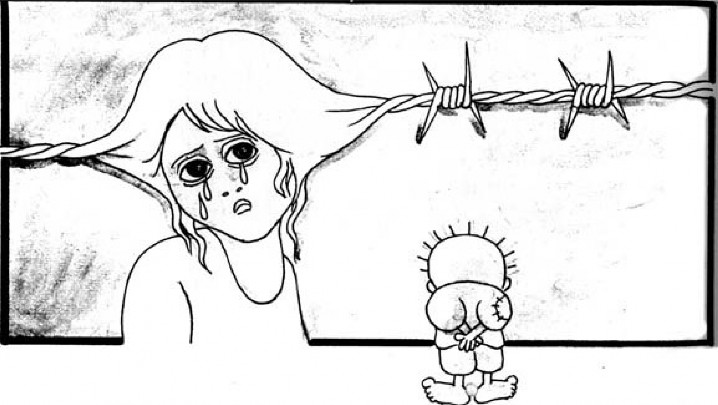
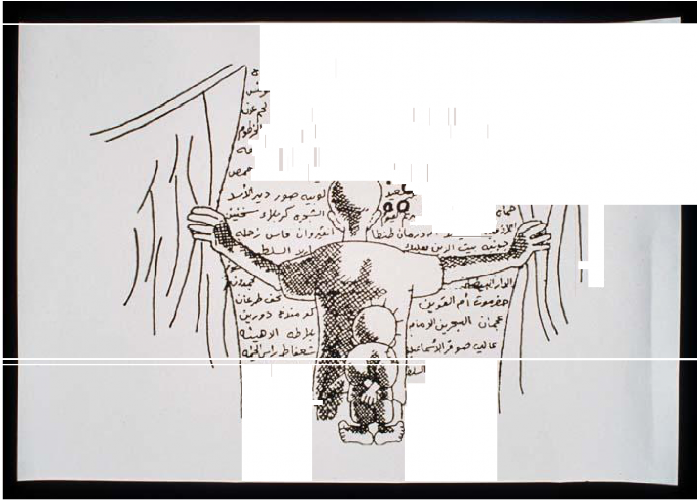
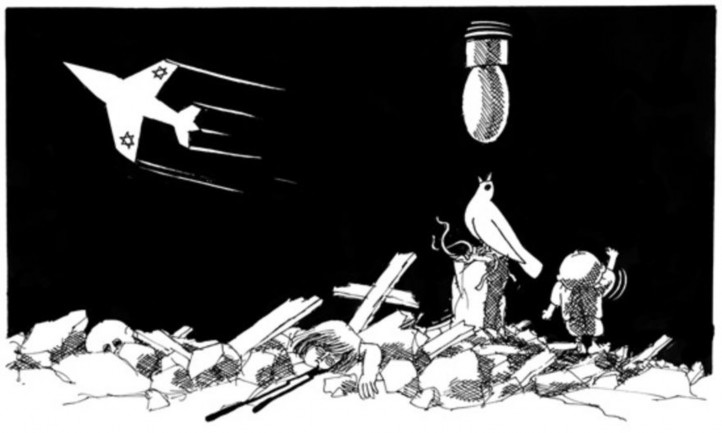
Palestinian political cartoonist known for his sharp, critical depictions of Palestinian suffering and Arab politics. His most famous creation is Handala, a barefoot 10-year-old refugee boy who became a symbol of Palestinian resistance and steadfastness (sumud). Al-Ali's cartoons, published in major Arab newspapers, exposed corruption, oppression, and the plight of displaced Palestinians. His outspoken work made him a target of threats, and in 1987, he was assassinated in London, though the perpetrators remain unknown. His legacy endures as a powerful voice for Palestinian resistance and justice.
\;,,\ »P ��. IJ ,,P\ג' �.,,נ. \j � �\.ןJi.., �-
. ��,;.,. 5: •
'ינ�.-'� vיי'� .;..,.;i �
.,. �.
. •
�
�.
�1,·
'u-•ג.�•-�'-.tJ".,;•.�• 1:"
... -
�י ו
t
-· . •
,•_ י
11'
�
� ,,,(ט '
,,��t.t'ו..;.·\....?...�
ir!lי 11!!!!'
._ו , n-�.rr י_r\i
� • • � 1
', 1 • .· wיי .•
.•
' . . i«' כ, �י..
- . vP ,tf'
....
(
.,���
J'י' -•
,.
'li!""' ,...,ן�· � •
lil
י --י ·'
• ,
,l
.,..,..iנ1,4o.1,L,.,,
q,�\ג.ג ;;
�� o.ot.Jו C
vי>,.'-'"� t\נ i
R4 • י;, v-!;ץ>
v----� ;-,�Ji
• .,, ,,;1•. ,..,-��
....
•• .
...
A CHILD IN PALESTINE
THE CARTOONS OF NAJI AL-ALI
INTROOUCTION BY JOE SACCO
1זe 'End.
Q., laנJI
וr•י
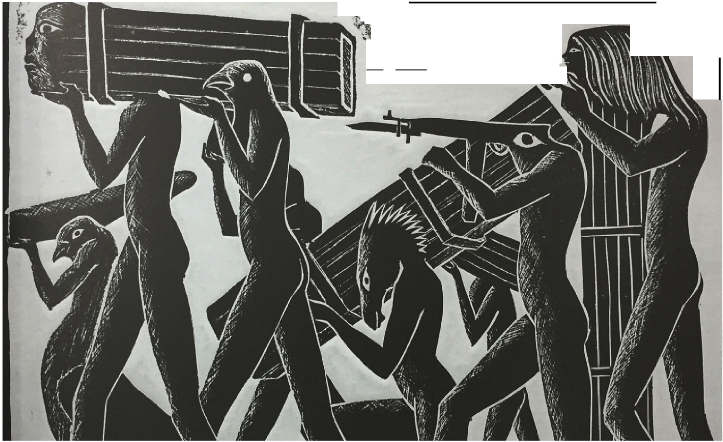
Mustafa al-Hallaj

Mustafa al-Hallaj, born in Salama, Palestine, became a refugee after the 1948 Nakba, moving through Damascus, Beirut, and Cairo. He studied sculpture in Cairo but turned to woodblock prints due to his displaced life. He later moved to Beirut, shaping fan al-muqawama (the art of resistance). His work was largely destroyed in the 1982 Lebanon War, forcing him to relocate to Damascus, where he remained a key figure in Palestinian art. He co-founded Palestinian artistic and writers' unions and helped establish a Damascus art gallery. In 2002, he tragically died in a fire while trying to save his artworks.

Self Portrait as Man, God, and the Devil


Untitled, 1985

'i.,f
• ,J •• ,i-,.P:.·7, .t-Y-1-
:: .; ' �.... i f .· יי • ,. j tו• :.•.,י:·
','.��- �,
,::.·i�:.·�·�
·:· -·f
;
,.,)i.·", �.
-
.
.ו..·;1ן;:1�,, :1-
ip <;,. 1'•
י,i< •'r. ·f
·�-·;�"4' !ו:;(�' �.,
..· :·i' '
.. t1)1 '·"·
·:
1
•'-:.r '
�.··1 ,.,,ז���-" ... � ,4, , יי--
. • 'tf,c
i!f!
�:
.,

woodcut print, framed signed "Mustafa Al Hallaj", dated "1965" and inscribed "special edition" in Arabic (lower right), executed in 1965
1967: The Naksa (Setback) and the rise of contemporary Palestinian resistance movements such as PFLP and Fatah.
Egyptian president Abdel Nasser
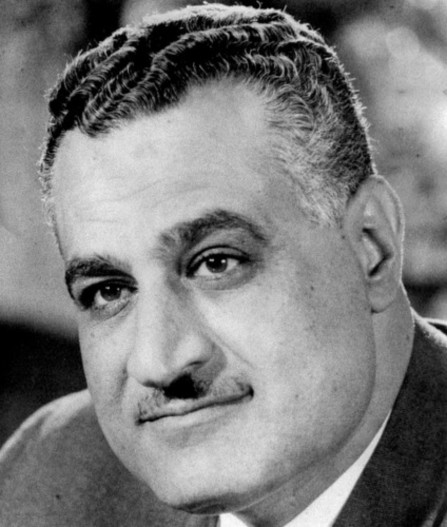
Gamal Abdel Nasser (1918–1970) was Egypt’s second president and a leading figure in Arab nationalism. He played a key role in the 1952 Egyptian Revolution, overthrowing the monarchy and introducing socialist reforms. As president (1956–1970), he nationalized the Suez Canal, defying Western powers and strengthening Egypt’s independence. A champion of Pan-Arabism, he led efforts to unify Arab nations, including the short-lived United Arab Republic with Syria. Nasser's policies included land reforms, industrialization, and expanding social services. Despite setbacks, including Egypt’s defeat in the 1967 Six-Day War, he remained a widely influential and charismatic leader until his death in 1970.
Post-Naksa Palestinian resistance
During the Six-Day War, Israel occupied the West Bank, East Jerusalem, Gaza, the Golan Heights, and the Sinai Peninsula. This defeat led the Palestinian resistance movement to realize that it could not rely on Arab nations or Pan-Arabism to achieve the liberation of Palestine. The Naksa of 1967 forced the Palestinian movement to distance itself from Arab regimes and recognize that Palestinian liberation was primarily a Palestinian responsibility.
Several resistance groups emerged during this period, including Fatah and the Popular Front for the Liberation of Palestine (PFLP). Both adopted secular frameworks of liberation, drawing inspiration from liberation movements in South America, Algeria, and Africa.
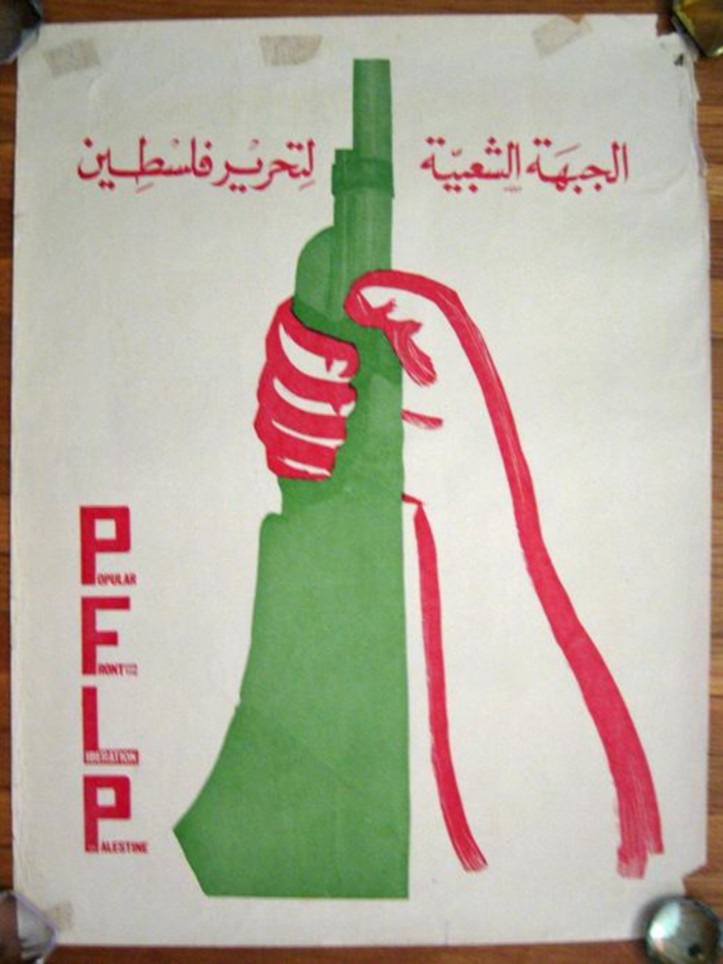
Popular Front for the Liberation of Palestine (PFLP):
The Popular Front for the Liberation of Palestine (PFLP), led by George Habash, was founded in 1967 as a Marxist-Leninist organization with strong Arab nationalist roots. Initially inspired by pan-Arabism, (Harakat Al-Qawmeen Al-Arab) the PFLP emerged as a leftist alternative to the Palestine Liberation Organization (PLO), advocating for armed struggle against Israel and the broader liberation of Palestine within a socialist framework.
Over time, the group embraced Marxist-Leninist ideology, aligning itself with global revolutionary movements and forming alliances with communist states such as the Soviet Union, China, and Cuba. The PFLP was known for high-profile attacks, including airplane hijackings in the late 1960s and 1970s, which were meant to internationalize the Palestinian struggle (See Wadee Hadadd and Laila Khalid) Unlike Fatah, which sought negotiations at later stages, the PFLP consistently rejected peace talks, emphasizing revolutionary armed resistance and anti-imperialism.

Freedom Fighters from the PFLP: George Habash
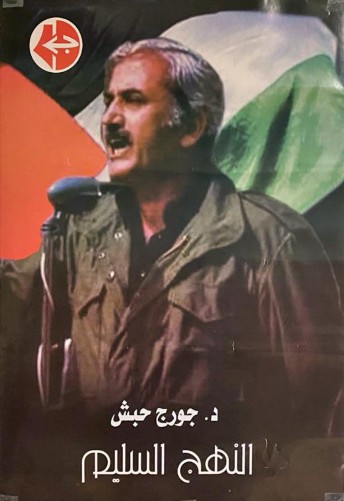
George Habash (1926–2008) was a Palestinian Christian revolutionary leader and the founder of the Popular Front for the Liberation of Palestine (PFLP), one of the most influential Palestinian resistance groups. Born in Lydda, Habash and his family were forced to flee during the 1948 Nakba, an experience that shaped his commitment to the Palestinian cause. A staunch advocate of armed struggle and Marxist-Leninist ideology, Habash rejected negotiations with Israel and saw Palestinian liberation as part of a broader revolutionary movement against imperialism and Zionism.
Freedom Fighters from the PFLP:
Wadie Haddad

Wadie Haddad (1927–1978), also known as Abu Hani, was a Palestinian militant leader and a founding member of the Popular Front for the Liberation of Palestine (PFLP). Born in Safed, his family fled to Lebanon during the 1948 Arab–Israeli War. He studied medicine at the American University of Beirut, where he met George Habash; together, they established the Arab Nationalist Movement (ANM), aiming for Arab unity and the liberation of Palestine. As the head of the PFLP's armed wing, Haddad orchestrated several high-profile operations, including the 1970 Dawson's Field hijackings and the 1976 Entebbe hijacking, aiming to internationalize the Palestinian cause.
Freedom Fighters from the PFLP: Laila Khalid

ﻟﯿLeila Khaled (Arabic: ﺪﻟﺎﺧ ﻰ ,ﻠborn 1944) is best known
for her role in the hijacking of two commercial airplanes in 1969 and 1970, making her an iconic figure in the Palestinian resistance movement. Born in Haifa, Palestine, Khaled and her family were forced to flee during the Nakba of 1948, settling in Lebanon. This experience fueled her dedication to the Palestinian cause. At the age of 15, she joined the Arab Nationalist Movement, which later evolved into the PFLP. In 1969, Khaled became the first woman to hijack an airplane, diverting TWA Flight 840 en route from Rome to Tel Aviv, demanding international attention for the Palestinian struggle. A year later, she attempted a second hijacking of El Al Flight 219, but the mission was thwarted, and she was arrested in London. She was later released in a prisoner exchange. Leila Khaled remains a symbol of Palestinian resistance. Her image, particularly with her keffiyeh and rifle, has become one of the most recognized symbols of Palestinian revolutionary movements.
FATAH (Harakat Altahrir Al-watani Al-Falastinin)
Fatah, founded in 1959 by Yasser Arafat and other Palestinian activists, is the largest faction within the Palestine Liberation Organization (PLO). Initially shaped by Arab nationalism, Fatah emphasized armed struggle as the primary means of liberating Palestine, launching guerrilla operations against Israel in the 1960s and 1970s.
Unlike the PFLP, Fatah was focusing on nationalist rather than ideological goals. Over time, the movement evolved, gradually shifting from military confrontation to diplomatic engagement. This transformation was marked by the Oslo Accords (1993), in which Fatah, under Arafat’s leadership, recognized Israel and committed to a two-state solution.
As the dominant force in the Palestinian Authority (PA), Fatah has struggled with internal divisions, corruption accusations, and challenges from rival groups like Hamas. Despite its diminished influence, Fatah remains central to Palestinian politics.


Freedom Fighters from FATAH:
Yasser Arafat
Yasser Arafat (1929–2004) was a Palestinian political leader and the longtime chairman of the Palestine Liberation Organization (PLO). A central figure in the Palestinian national movement, he co-founded Fatah in the late 1950s and later became the symbol of Palestinian resistance. Arafat led armed struggle efforts against Israeli occupation but shifted toward negotiations, signing the Oslo Accords in 1993, which granted limited Palestinian self-rule.

Freedom Fighters from FATAH:
Salah Khalaf
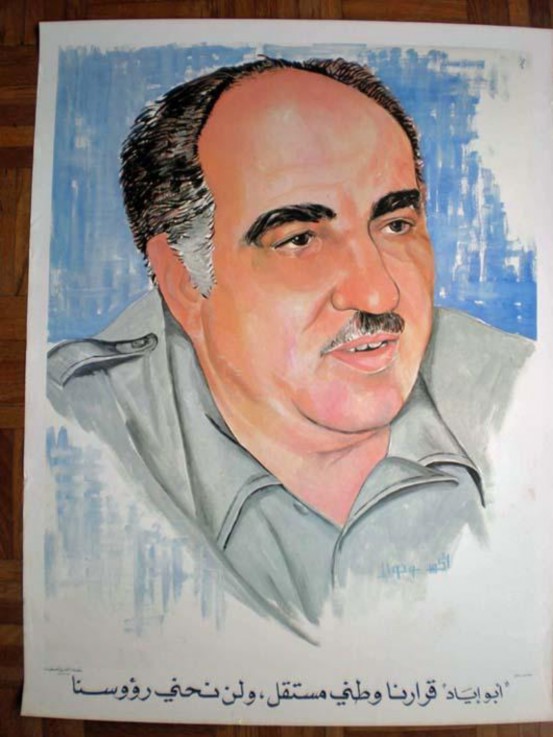
Salah Khalaf (1933–1991), also known as Abu Iyad, was a key Palestinian political leader and a founding member of Fatah and the Palestine Liberation Organization (PLO). Born in Jaffa, he was displaced during the 1948 Nakba and later became a close ally of Yasser Arafat. As the head of Black September, he was linked to the 1972 Munich Olympic attack. Despite his militant past, Khalaf later advocated for diplomatic solutions to the Palestinian cause. He was assassinated in Tunis in 1991.
Palestinian Art in the the third period, Explorers (1965–95),
Includes art created both in exile and in Palestine. In the wake of the 1967 occupation, Palestinian artists in the occupied West Bank and Gaza deployed their art to express collective identity – and often met with harsh repression.
Palestinians under military occupation in the West Bank and the Gaza Strip were confined to a cultural ghetto. Insulated from the Arab world, a new generation of trained and untrained artists emerged, to mention a few :
Vera Tamari (b. 1945), Fathi Ghabin (b. 1947),
Suleiman Mansour (b. 1948), Samira Badran (b. 1959)
In 1973, the group established the League of Palestinian Artists , whose exhibitions were the first group manifestation of Palestinian art on native soil.
Vera Tameri

Vera Tamari is a Palestinian artist, educator, and curator born in 1945 to a creative Jerusalem household. Her mother, Margo Dabbas, and brother, Vladimir Tamari, were both visual artists, and her sister, Tania, is a classical singer. In 1966, she received a B.A. in fine arts from the Beirut College for Women (presently the Lebanese American University), and studied ceramics at the Istituto Statale d’Arte per la Ceramica in Florence, Italy, from 1972 to 1974. In 1984, she obtained an MPhil in Islamic Art and Architecture from Oxford University. Tamari joined the Faculty of Architecture at Birzeit University in 1986, where she taught art history and visual communication for nearly two decades and established the Birzeit Ethnographic and Art Museum in 2005.

PALESTINIAN WOMEN AT WORK 1979
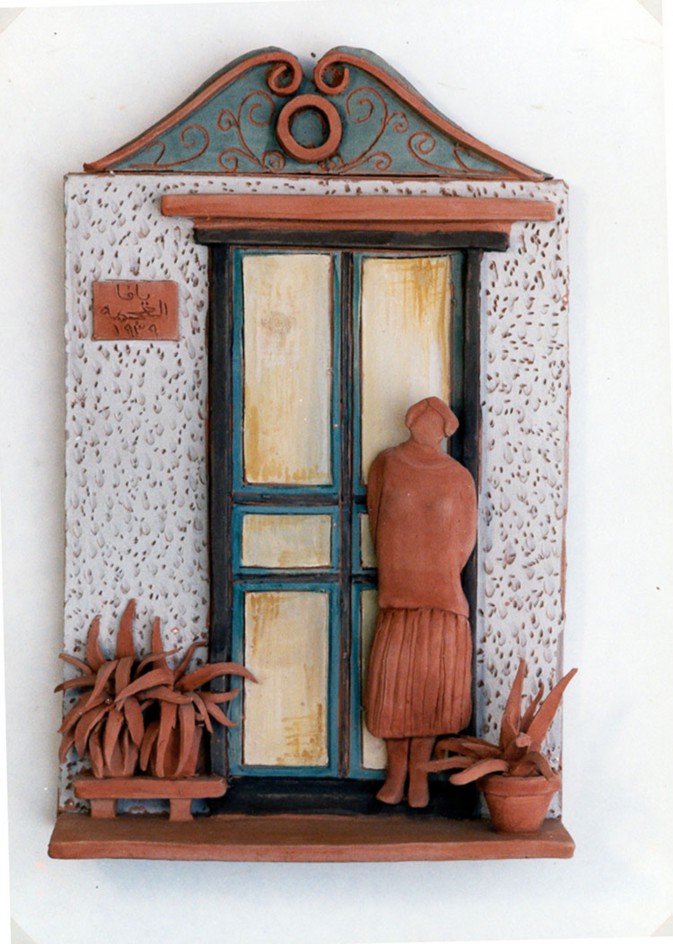
Woman at the door
1968: The Battle of Karameh (Jordan)
The Palestine Liberation Organization (PLO) and Jordanian forces fought Israeli troops in the town of Karameh, achieving a symbolic victory. Though Israel won militarily, the battle boosted Palestinian morale and increased global recognition of Palestinian armed resistance.

Painter: Sliman Mansour

Sliman Mansour is a renowned Palestinian painter, sculptor, author, and cartoonist, recognized as a leading figure in contemporary Palestinian art. His work embodies the spirit of Sumud (steadfastness) and often portrays the Palestinian struggle through depictions of traditional women and Levantine landscapes. An artist of the Intifada. Scholar Samia Halaby identifies him as a key figure in the Liberation Art Movement, acknowledging his cultural contributions before and after the Intifada.

The Camel of Heavy Burdens (Arabic: Jamal Al Muhammil) An alternative English title sometimes associated with this image, Carry On, was a fabrication of the publisher The original painting was done in 1973 and the first printing was done in 1975 Source: email correspondence with the artist of 2 April 2009

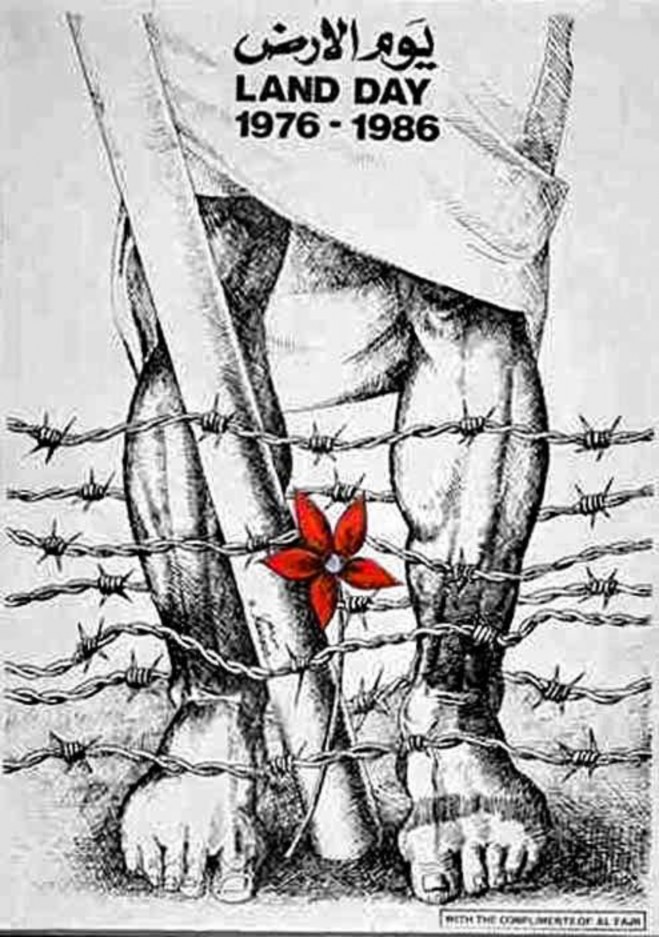

Perseverance, 1980s
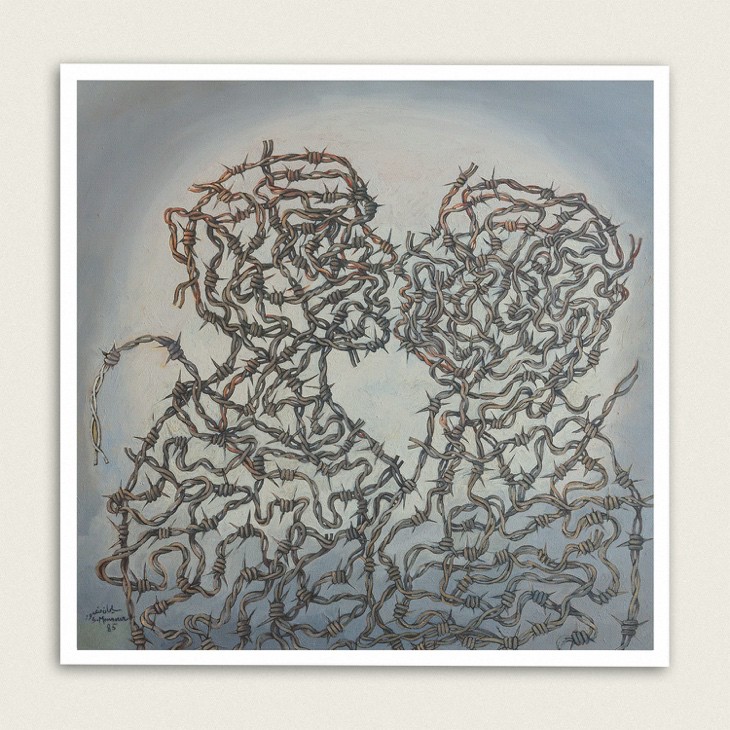
Settlers 1985
1982: Siege of Beirut and Sabra and Shatila Massacres.
Israel invaded Lebanon, aiming to crush the PLO. After weeks of siege and bombardment of Beirut, the PLO leadership was forced to evacuate to Tunisia. The invasion culminated in the Sabra and Shatila massacre, where Lebanese militias, with Israeli watching and complicity, killed thousands of Palestinian refugees.


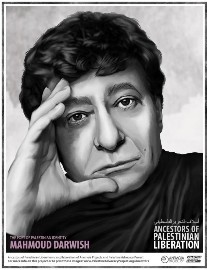
Mahmood Darwish
Mahmoud Darwish (Arabic:
2008–1941
,ﺶﯾوردﻣﻤدﻮﺤ)
was a celebrated Palestinian poet and writer, widely regarded as the national poet of Palestine. His poetry, deeply rooted in themes of exile, identity, resistance, and love, gave voice to the Palestinian struggle and experience. His works, such as Identity Card and Unfortunately, It Was Paradise, blend personal and collective narratives, resonating with audiences worldwide. Darwish was also a key figure in the Palestinian cultural and political landscape, contributing to the Palestinian Liberation Organization (PLO) and drafting the Palestinian Declaration of Independence in 1988. His lyrical, evocative poetry continues to inspire and influence literature and activism globally.
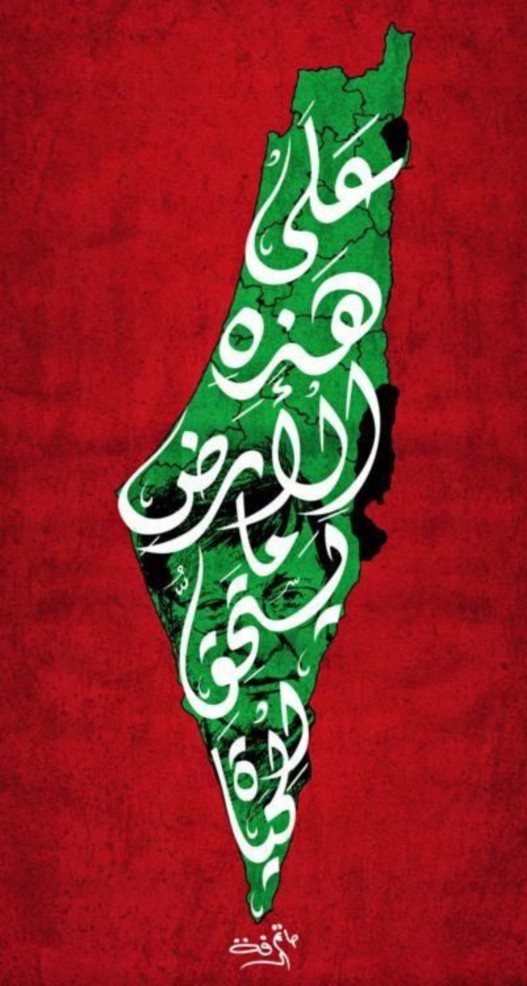
The mask has fallen from the mask from the mask The mask has fallen
No brothers for you, my brother
No friends, my friend No fortresses
No water for you, no medicine
No sky, no blood
No sail, no forward, no backward Besiege your siege... there is no escape Your arm has fallen—pick it up
And strike your enemy... there is no escape And I have fallen near you—pick me up And strike your enemy with me
For now, you are free Free—and free are your dead,
Or your wounded, they are your ammunition
So strike with them
Strike your enemy... there is no escape Our limbs, our names
Besiege your siege with madness, with madness Those you loved are gone, they are gone
So either you are, or you are not
The mask has fallen from the mask from the mask The mask has fallen
No one but you remains
In this expanse open to enemies and oblivion So make every barricade a homeland
No... no one
Mahmood Darwish (1982)
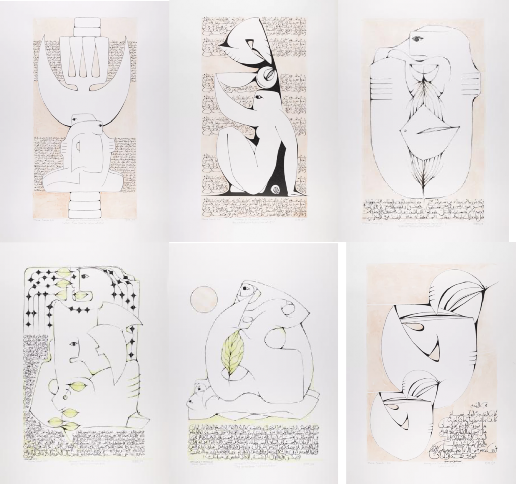

the Homage to Mahmoud Darwish series
Date made1979 Artist Mona Saudi
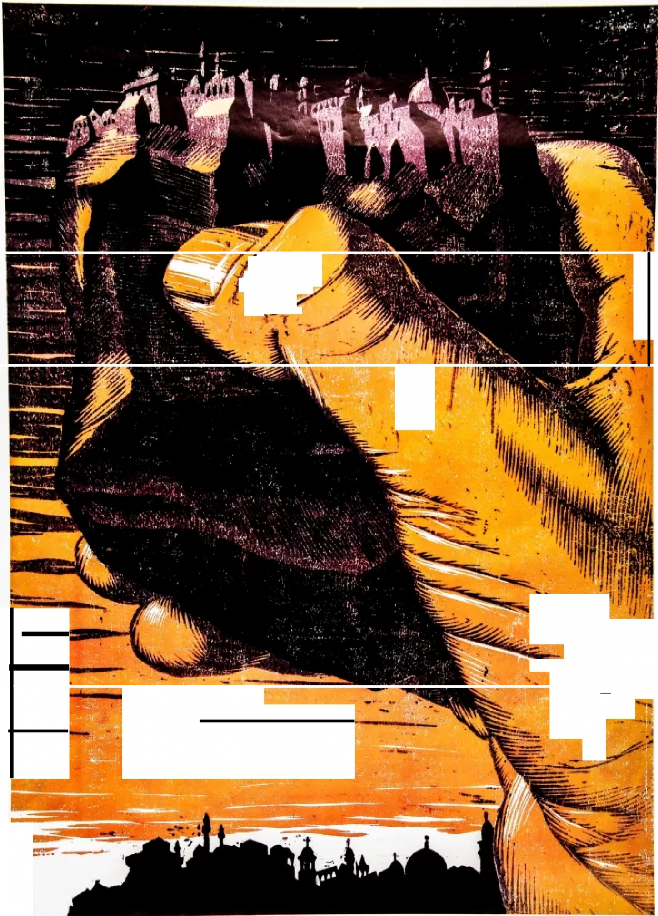
''i..;'//נI ••
ili'·'' ,- ,-•.-
... .
,.•
t • '
) •• 1
·\•
...
"""'-�
.,.,
'
"י" •
..... ..T ,
.....
-=.........
-:1.-.
�'-;:.,
·�
.- ---
...--...
ף .
י--.., ·� ....
. .
. -·
Pי'1t
""
�
,...i,�.:>,.....,..� כ,
• ' '�• י1:.-:•1�1·-'�,--;, 1·St.,.�c
,-. •;:ן:יי.'."',�h))\\\�1·.--י�::1 , ......>-,'.::,-.'../...,

��-"". -'•;::s�"J>�. \•'. ��·1;.-·:;.:,:!5
�..y.>..,/
M�1.c._
-�;-:ב_,.-_:..,.ג-... �•
Palstinian Artist Samira Badran
Samira Badran (Libya, 1954) is a Palestinian Visual Artist based in Barcelona. Her father Jamal Badran played a decisive role in her artistic formation. She graduated in 1976 from the Academy of Fine Arts in Cairo and studied etching and painting at the Accademia Delle Belle Arti in Florence from 1978- 1982. She is based in Barcelona-Catalunya. Her works are focused on her perceptions of the Palestinian reality under occupation. Collective memory , confinement and immobility are some concepts she has delt in her recent works. She normally experiment with different techniques, ink drawings, watercolor , acrylic painting, collage, drawing on top photography, prints and animation.
http://www.samirabadran.com/portfolio/

Siege 2005

Collective memory 2015

The bridge 1984

Limits of confinment 2015
1987–1993: The First Intifada
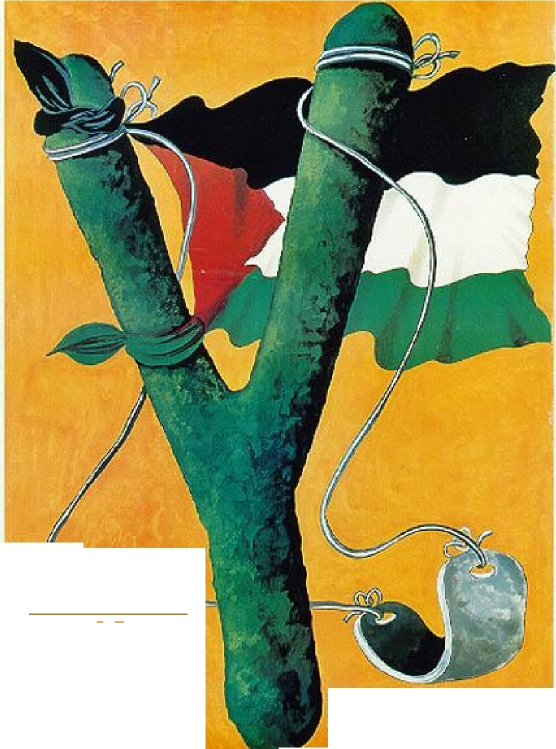
The spark for the first Intifada came from Jabalia refugee camp in the northern Gaza. A grassroots uprising against Israeli occupation, marked by mass protests, civil disobedience, and clashes between Palestinian youth and Israeli forces. Through decentralized popular committees linked to political parties, activists built counter-power structures to challenge colonial rule, capitalism, and patriarchy. Resistance became a daily practice, emphasizing solidarity, voluntarism, and economic self-sufficiency. One important lessons learned was that rebuilding the Palestinian liberation movement requires overcoming Zionist-imposed fragmentation and neoliberal economic dependency. A progressive national consciousness must replace symbolic resistance with a focus on social and economic equality. As land colonization and economic repression persist, reclaiming the resistance-based national economy is crucial. Intellectuals and political movements must develop an alternative economic vision that counters the Palestinian Authority’s neoliberal policies, fostering self-reliance and Sumud (steadfastness) as the foundation of a renewed, people- centered struggle for Palestinian liberation.

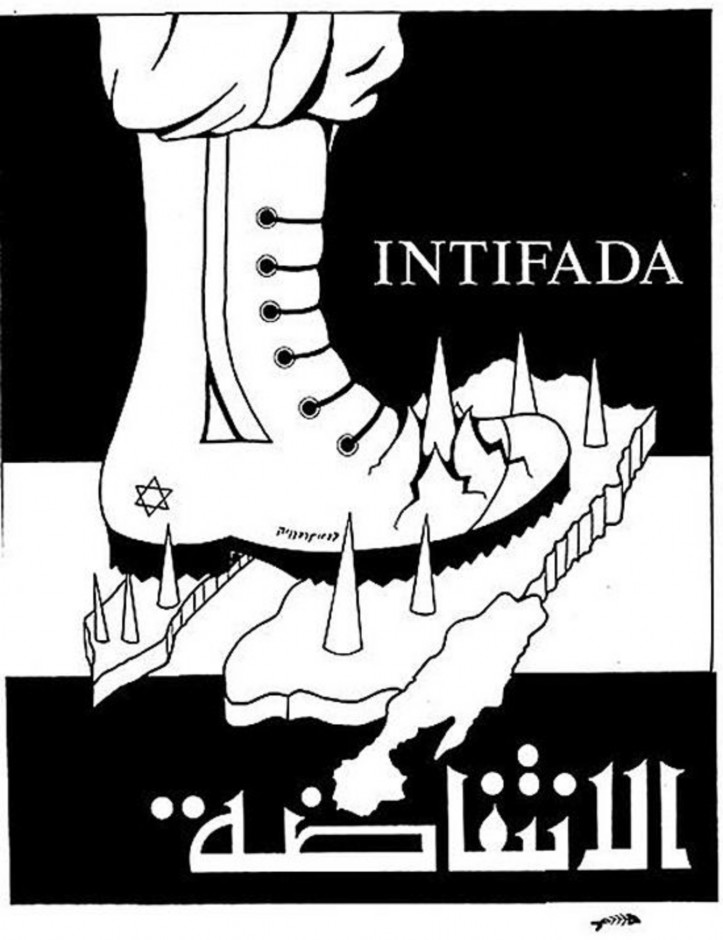
Ayman Bardawil 1990


l-.:;.
�
=
'
j



--,�"""'- �1N T IFADA 89 R ,;.,1 ci i i y! --
1987 Establishment of Harakat Almuqawma Alislamia Hamas 
Hamas (Ḥarakat al-Muqāwamah al-ʾIslāmiyyah) is a Palestinian political organization with a military wing, the Qassam Brigades. Founded in 1987 by Ahmed Yassin during the First Intifada. Founder Sheikh Ahmed Yassin: Born in Ashkelon (then Mandatory Palestine) in either 1929 or 1936, Yassin and his family fled to Gaza during the 1948 Nakba. A quadriplegic due to a childhood accident, he later became the spiritual leader of Hamas. In 2004, an Israeli airstrike assisinated Yassin as he was leaving morning prayers in Gaza City, an attack that also killed his bodyguards and several bystanders. His funeral was attended by 200,000 people.

1993–1995: The Oslo Accords and the Establishment of the Palestinian Authority
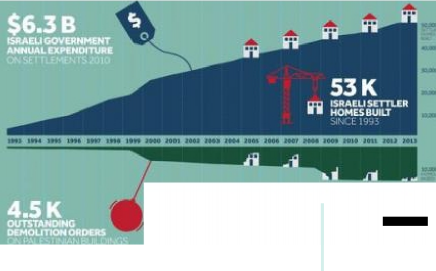
The PLO and Israel signed the Oslo Accords, which led to the creation of the Palestinian Authority (PA) and limited self-rule in parts of the West Bank and Gaza. Many Palestinians criticized the accords for failing to halt settlement expansion and securing only partial autonomy under Israeli control.


20!E����s�!!��u�!
N[ ooדןATl()N';זAI.oo:::uי,סQtקrסךס
נ"י "'יי י' .... ·-

... ,..
;:;�
ff
1- -·
, ,
AHlיWיOUS WASNltOTOH �
-
-�·
�RA S ["'1 NTS&PA r<;TוNוA� <; LACE'IE"-
oouii:�
11K
OUTOl'JPUSAUH
-�
ISRAU RE<;TR ONS & PAו..י.:s, NIAN RAGM NlATIO
1
,..

.
"'י
י'ייי 'י


.
GAZA
WE$T
.....
BANK
-:.�.:
••••••·••·••
:-.·:
••••
::...
·**·

-, 'יi  .'.י,יו
A
6YEAR
A
440KM 522
-
""1.ESTINE AfBA ------
--:::--
UA
'
-
--=-
e<!כ$0
-=-
2000–2005: The Second Intifada
Sparked by Ariel Sharon’s provocative visit to Al-Aqsa Mosque, the Second Intifada was far more violent than the first, involving armed resistance, Israeli military incursions, and severe crackdowns. Thousands of Palestinians were killed, and Israel responded with reoccupation of parts of the West Bank and the construction of the separation wall. The second intifada led to withdrawal from Gaza, yet with tight blockade on Gaza.

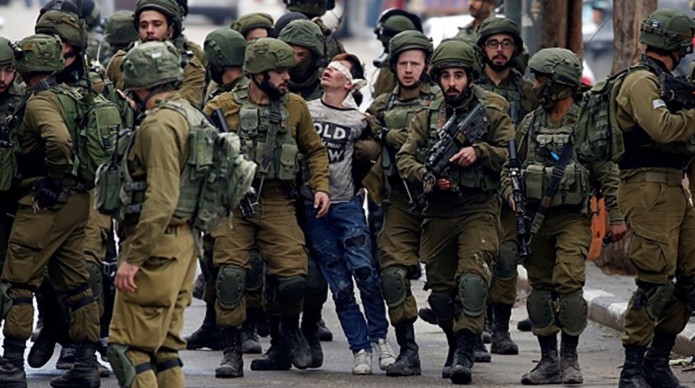
Iconic picture from the second Intifada (Fars Ouda phasing the tank with a stone)

Graffiti shows Mohammad al-Durrah and his father in Gaza.
Life under Oslo Agreements


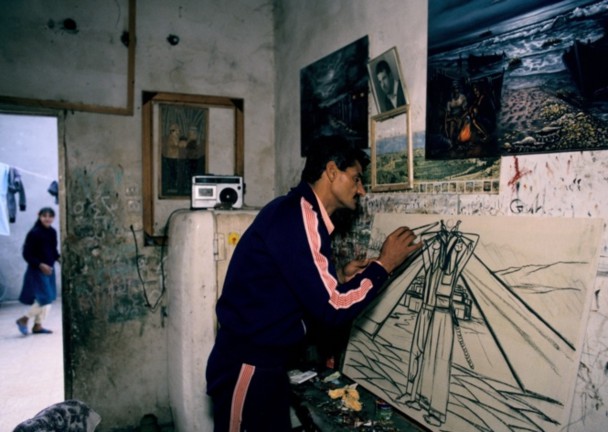
Fathi Ghaben
Fathi Ghaben (1947–2024) was a Palestinian self-taught artist and educator known for depicting Palestinian culture, resistance, and the right of return in his paintings. He died in Gaza on 25 February 2024 at age 77 during the Israel–Hamas war. Suffering from severe lung issues, he was unable to access oxygen and medicine due to the conflict. His requests to leave Gaza for medical treatment were ignored by Israeli authorities, preventing him from receiving necessary care. His death highlights the humanitarian crisis in Gaza amid the ongoing war and blockade.
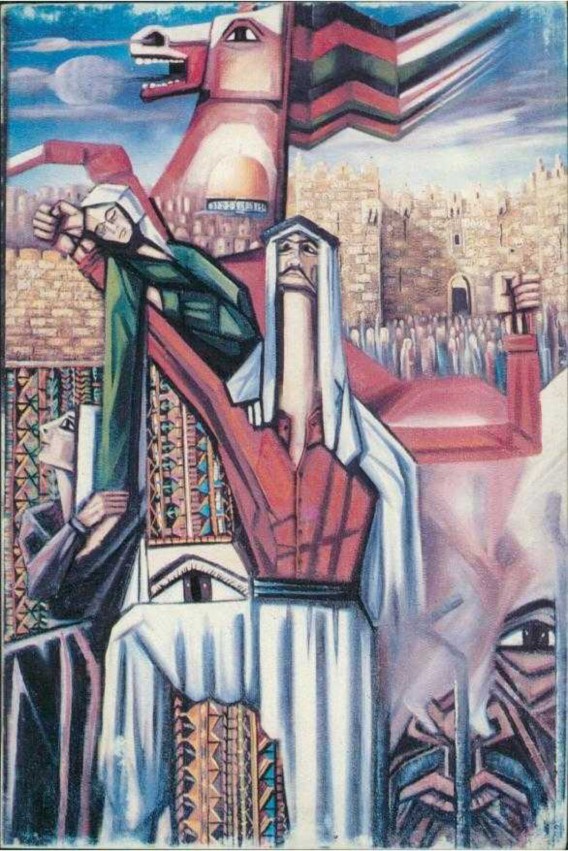
Identity by Fathi Ghabin, Oil on Canvas (1980).
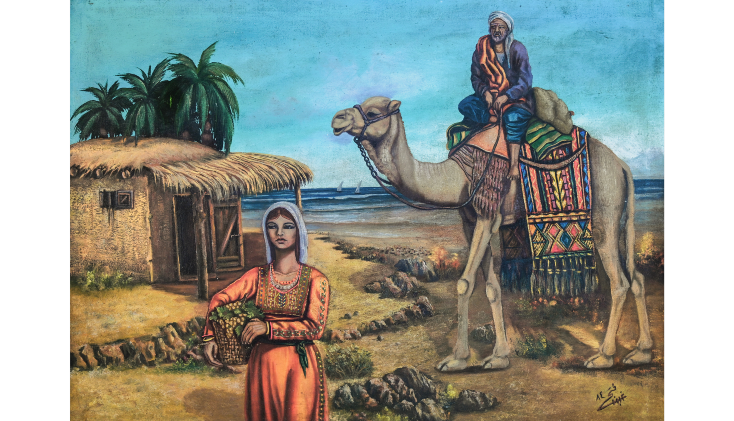
The beach in Gaza 1984

The untutored Fathi Ghabin is one artist whose paintings made him a political celebrity within his community. Born in Gaza, Ghabin painted as an intuitive by-product of his daily involvement with community activities protesting the state of siege. Full of popular cultural symbols, Ghabin's narrative art led to his repeated incarceration. His painting of his seven- year-old nephew, who was shot dead at a demonstration, led to his incarceration for six months for having painted the child dressed in the forbidden colors of the Palestinian flag. Upon his release, Ghabin painted the image of a mass demonstration. Above the demonstrators, the sky is framed by two raised arms from which hang broken chains. Between the raised arms, a white horse, wrapped in the flag, gallops into the sky. Among the miniature faces of the demonstrators is the face of Ghabin himself.
https://www.palestineposterproject.org/artists/fathy-ghabin-1947-2024

The title of this painting is "Saj Bread"
Present Tense: New Directions (1995-2016), Palestinian contemporary visual arts have grown—in the number of practicing artists and in greater visibility and innovation, with a shift toward engaging with multimedia conceptual art. Ex. Laila Shawaw Laila Shawa (b. 1940- 2022),
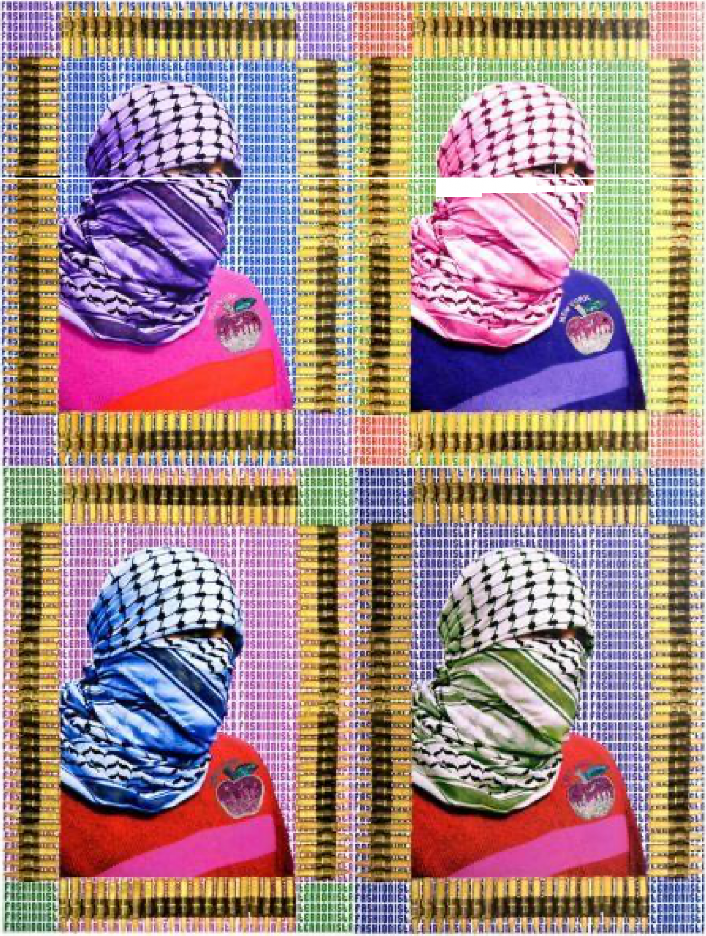
Laila Shawa
Laila Shawa (1940–2022) was a Palestinian visual artist known for her politically charged works reflecting the injustices and struggles of her homeland. A key figure in the Arabic revolutionary contemporary art scene, she used paintings, sculptures, and silkscreen prints to depict themes of resistance and oppression. Growing up in Gaza, as the daughter of activist and mayor Rashad al- Shawa, she developed a strong revolutionary mindset. Her art has been exhibited internationally and is part of major collections, including The British Museum. Through her work, Shawa remains a significant voice in Palestinian political and contemporary art.
t:ב.,���.���-.-. ,",,,,
Fashionista Terrorista 2010

Impossible dream 1989
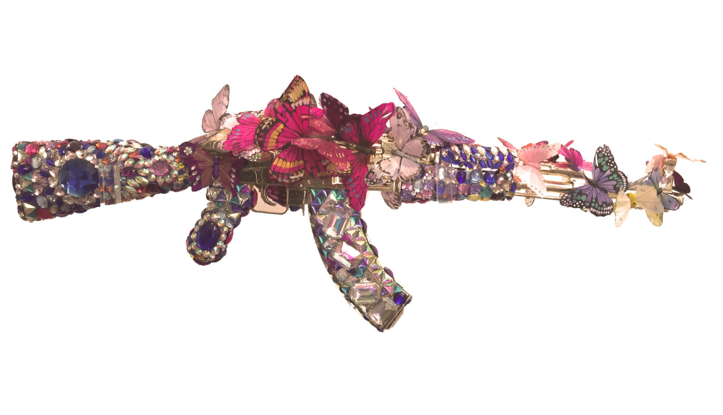
Where Souls Dwell V, 2013
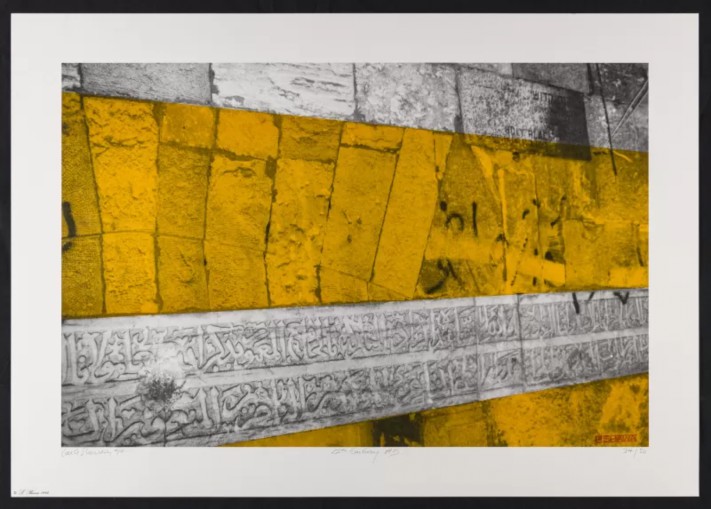
12th Century AD from the Walls of Gaza Series
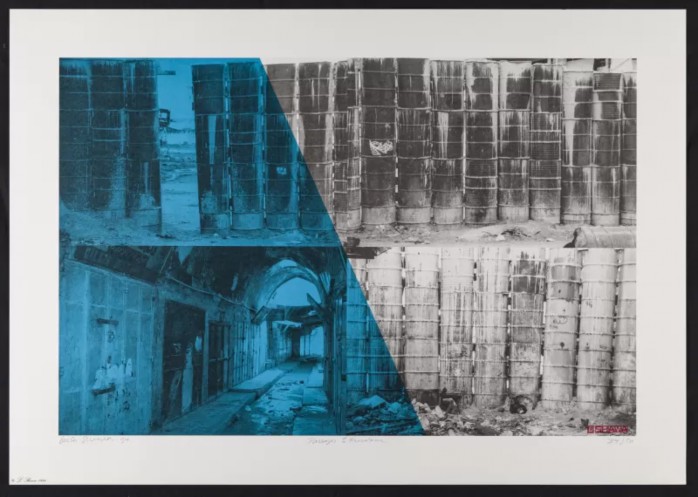
Passages to Freedom 1994
Journalism
Shireen Abu Akleh (1971–2022) was a renowned Palestinian-American journalist who worked for Al Jazeera for 25 years. She was widely recognized for her in-depth reporting on the Palestinian territories and became an influential figure in Middle Eastern journalism. On May 11, 2022, she was killed by Israeli forces while covering a raid on the Jenin refugee camp, despite wearing a press vest. Abu Akleh was a role model for Arab and Palestinian women and remains an icon of Palestinian journalism, known for her fearless reporting and dedication to documenting the realities of life under occupation.
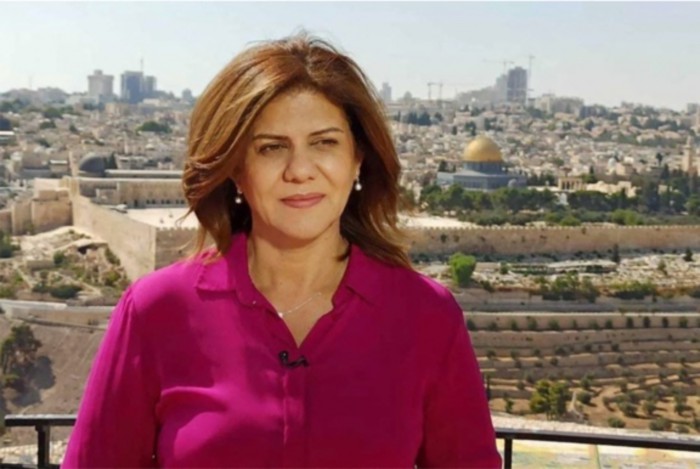

Israeli police attacked the funeral procession - nearly forcing pallbearers to drop Abu Akleh's coffin [Ammar Awad/Reuters]
The Prison Break 7th of October
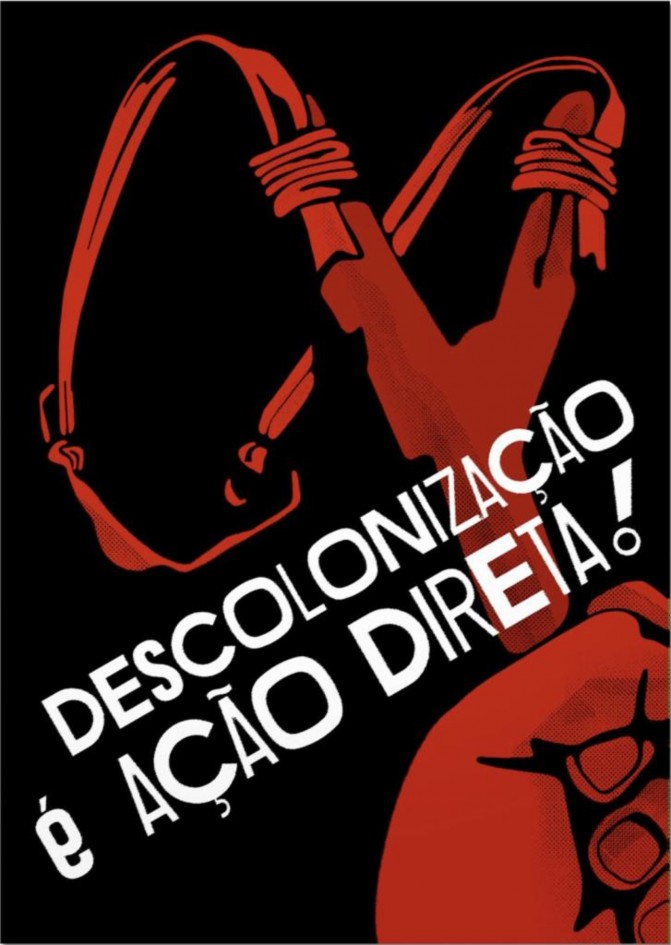
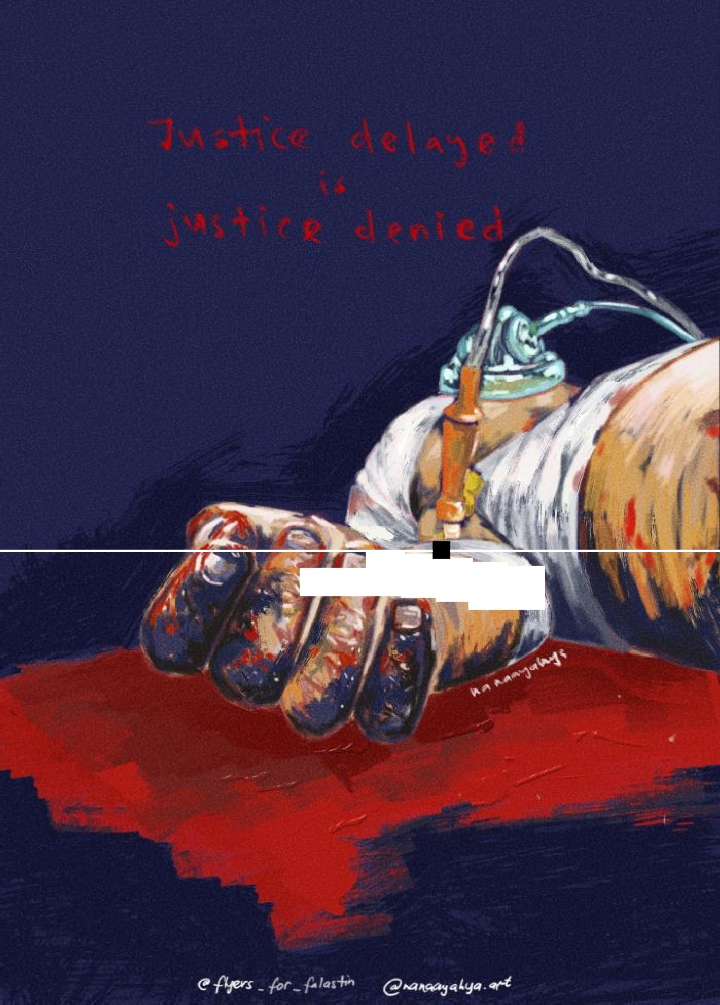
For the first time in modern history, the Palestinians took control of both the timing and location of the battle. Meanwhile, Arab nations are increasingly normalizing relations with Israel, and Palestine is being sidelined from global discourse. The number of settlers in the West Bank has surpassed 700,000. We have witnessed how the media and political establishments in the west, either through active support, silence, or indifference, prioritize defending and protecting Israel.

October 7th marks a pivotal moment in the struggle for the decolonization of Palestine, serving as both a beacon of resistance and an inspiration for liberation movements worldwide. It symbolizes a turning point in the fight against occupation and oppression, reaffirming the right to self-determination and challenging the structures that sustain colonial rule. This moment resonates beyond Palestine, inspiring oppressed peoples and revolutionary movements globally, reinforcing the belief that freedom, justice, and dignity are achievable through resilience and collective struggle.



:::זזנ,8-e�- �..�
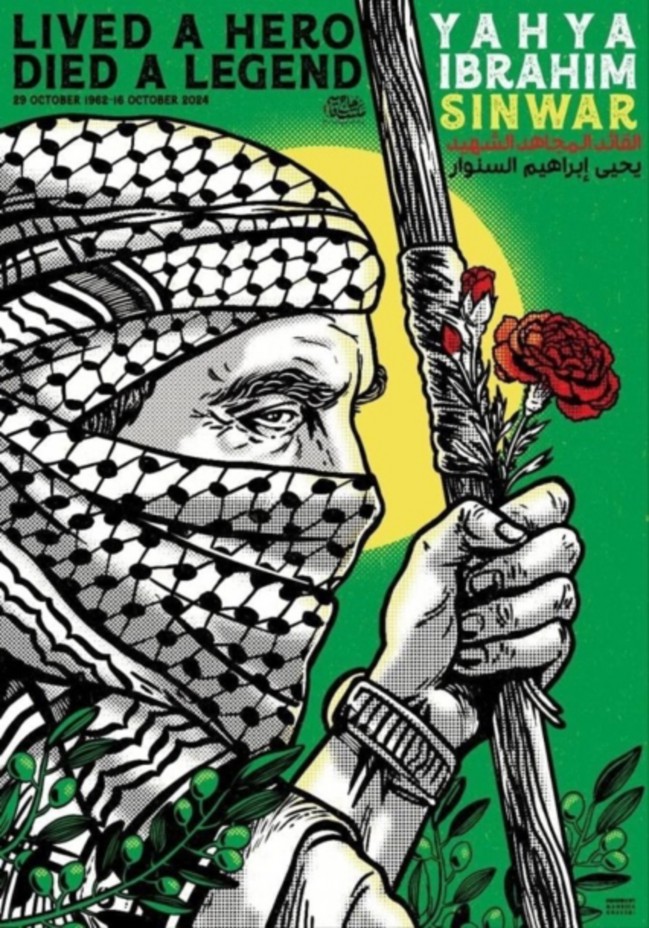
Yahia El-Senwar
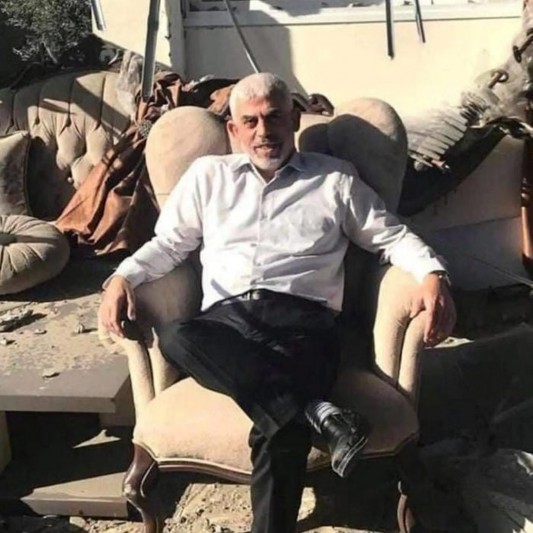
Yahya Sinwar was born in 1962 in the Khan Yunis refugee camp to a family displaced in the Nakba in 1948. He earned a degree in Arabic studies from the Islamic University of Gaza. In 1989, he was sentenced to four life terms in Israel for organizing resitsance but was released in a 2011 prisoner exchange. While in prison, he remained active in Hamas’s military coordination and co-founded its security apparatus.



En hyllest til Gaza
SUMUD
Sumud er et arabisk ord som kan oversettes til standhaftighet. Folkemordet i Gaza har likevel gitt ordet sumud nye menninger og dimensjoner som vi ma reflektere over, erkjenne og ta i bruk.
Gazassumud betyr:
T A kjempe til den siste pusten
T A bevare anstendigheten
T A lide i stillhet
TA holde ut
יז A holde troen
To be Continued ……….
https://palmuseum.org/en/museum-from- home/stories-from-palestine/road-1936-revolt